
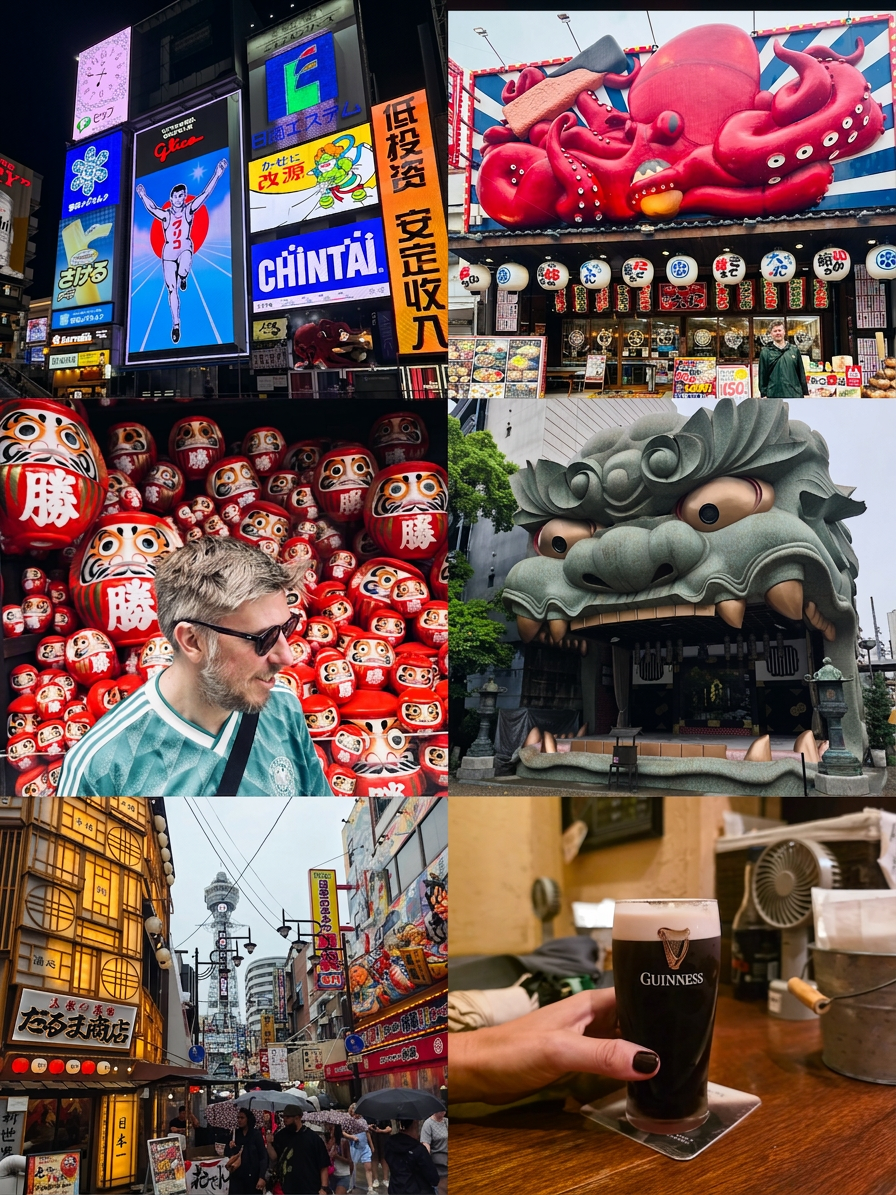
Somehow, someway, we are approaching the ten year anniversary of visiting every Irish Pub on Earth (correct day of observance for those who practice: Feb 2nd, 2027- also my birthday, buy me a pint -actually two pints for this momentous occasion). And for 2027, I have something pretty big planned, oh don’t you worry. One of the fondest of all my trips was also about 10 years ago, visiting South East Asia via Indonesia and Singapore in Great Expect-Asians. Since then, I’ve racked up a fair few miles around the Western hemisphere, sure, but hadn’t ventured back this far east since. Eyeing an end of year academic lull at work, the decision to visit Japan became a no-brainer – if you like any type of thing of any kind ever, then you’ll love Japan. Food, tech, culture, spirits (alcoholic + spooky),history, punctual trains, religious sites, ridiculous vending machines, maid outfits, cutesie mascots, fine cratfsmanship, mechs, outrageously good customer service, good luck totems, highballs and a host of other well worn cliches- so much to whet the traveller’s appetites. Plus, due to the current weakness of the Yen, now is the perfect time to lend a hand funnelling hard-earned tourist dollars into the local economy. Added to this, while always popular, Japan has become a much-desired destination after successfully hosting the 2019 Rugby World Cup and the 2020 Olympics, so it was high time I took a trip to the country that doesn’t actually call itself Japan – Nihon!
This venture, I will admit, was the most complex to coordinate. I aim to plan meticulously for these trips, but by god, Tokyo nearly stumped me. The megacity formerly known as Edo was made capital in 1868, taking the mantle from the tranquil west coast haven of Kyoto. The name ‘Tokyo’ means ‘eastern capital’, a pretty perfunctory name for such a mighty city of over 70,000 restaurants and 38 million inhabitants.The thing about Japan, and Tokyo in particular is that there are hundreds of thousands of places to eat, drink and be merry, and the place sprawls out far as the eye can see. A further conundrum comes with the unique rating culture of Tokyoite clientele. Despite the mild mannered exteriors of the average punter (in person), when researching go-to- spots, one must factor in the ruthlessly blunt/ brutally honest Japanese review style, where anything scoring a 3/5 is actually pretty good. A score of 5 is borderline non-existent, as no-one has yet achieved true perfection and never will. Given the urban population squeeze, space is also at a premium, so a lot of places have room for about 6 or 7 patrons, or charge for the table, offering you a small free snack (otoshi) alongside these cover charges. Many spots also require all members to buy drink and a main meal, so no lingering around with just a bowl of edamame beans and a tap water. After doing some cursory searches on social media for some assistance in planning, the algorithm decided to bombard me with a very particular kind of nonsense content. The videos followed a certain theme: a fear of fucking things up, with titles like Foreigners, don’t do this!! / If you wanna be a local, do this! / 9 things you should never do!! If you do this, your a big dirty Gaijin Barbarian and Everyone will Point at You and Say They Hate You’. Now, I am absolutely fine being thought a tourist, particularly when I very clearly am a tourist. But a tourist who’s better than all the other tourists, mind – – I walk around both hands behind my back when visiting sacred shrines, and throw in a casual “gochisosama deshita” after a meal. It’s important to show respect to your hosts, sure, but is all this trepidation at causing potential international incidents via some cross-cultural faux-pas really necessary? Accordingly, I became intrigued by the concept of a Japanese- Irish pub, and what, if any, would be the appropriate etiquette?
The ”West” has long been fascinated with the specific concept of ”Japaneseness” in a way we don’t do with any other country. We don’t ponder over the many facets of Bulgarianness, or debate the essence of pure Paraguayanism. Yet there is a long track record of fascination with this particular remote series of volcanic islands on the fringes of the Eurasian landmass. Initially it was the Portuguese who first traded with medieval Japan in the 16th and 17th centuries, gifting Japan tempura, lovely cakes and guns. All the essentials. During the period of the Togukawa Shogunate, Japan decided they didn’t want anything to do with us Christ-preaching, milk- drinking Gaijin Barbarians, and so a policy of isolation was enforced. Although not entirely, as the Dutch were allowed establish an outpost in Nagasaki to allow for a swapping of ideas, herein known in Japanese as ” Dutch Knowledge”, which is one of the few instances where the prefix “Dutch” accompanies something positive. All was to change, however, in the 1850s, when along came a fleet of American gunships marshalled by Commodore Matthew E. Perry, who at cannon point asked the Japanese if they’d be interested in opening up their lucrative markets to the wonders of American capitalism. He gave them a year to mull over this non-offer. Could Commodore Matthew Perry BE any more of an imperialist pig?
Soon after Perry’s cameo, following the Meiji restoration that ended the rule of the Samurai Shoguns and the return of the Emperor, the Japanese decided you can’t fight capitalism and gave in, allowing for a two way cultural exchange that led to Japan’s rapid modernisation/westernisation. As the quote went “Japan must undergo a second birth, with America as its new mother and France as its father“. No wonder they went a bit mad in the 30s. They imitated the west so successfully, by the late 1930s they were colonising and taking over East Asia, till the Yanks had to step in and stop the whole show circa 1945. Post war, America retained control and interest in Japan. Jazz music, baseball, 7-Elevens all became part of Japanese culture, but retaining a unique Japanese flavour. After unsuccessfully trying to conquer the world through military means, the tycoons then tried economic submission, exporting cars, tech, video games, literally everything until the economic bubble burst in the early 1990s. What followed was a lost decade, which gave way to a lost 20 years, now going on into its third lost decade. Like many of its economic contemporaries, Japan, it was said, had lost a sense of its national purpose and was trying to find its way in the current age. Aren’t we all, lads? A pal described Japan as ‘the future, as seen from the 80s’, which I think captures the essence pretty well.
A third wave of Japanese influence has come in the form of cultural exchange (clearly taking a leaf out of the Irish method of soft-power global dominance). Japanese clothing stores like Muji and Uniqlo dominate most wardrobes.(Even now, as I write this, I myself am clad head to toe in minimalist functional Japanese clothing, including socks and jocks.) Sushi bars, ramen stalls and matcha cafes are as common a feature in major global cities as any Irish pub. J-Pop, Studio Ghibli, Pokemon, OnePiece, Akira, manga/anime are no longer exotic curios but essential fixtures of the cultural canon of the west, while remaining distinctly Japanese. Less tangible elements dominate too, with conceptual aesthetics and design unavoidable. Japanese has a word for everything. It’s like a different language. There’s mono no aware – the pathos of things and the acceptance of impermanence. Unsurprisingly there’s no word in English. Ask someone next time you’re at the football about the pathos of things. ‘Wabi Sabi‘ meanwhile is the acceptance of imperfection, a key component of art and design, something that my father, unbeknownst to him, practised when building a dog house that resembled a favela shanty house. There’s also Wakon Yosai – Western Knowledge, Japanese Spirit– a concept of design and development. Actually this one is pretty important for our purposes – with the Japanese now being world leaders in the noble Irish art of whiskey making , a shining of example of taking ideas from abroad and replicating them with trademark Japanese flourishes and a commitment to excellence. Overtime, this allowed Japan to pick the best bits of Western culture- first of all medical knowledge, military strategy, economic theory and later, French food, American pop culture and hopefully Irish pubs.
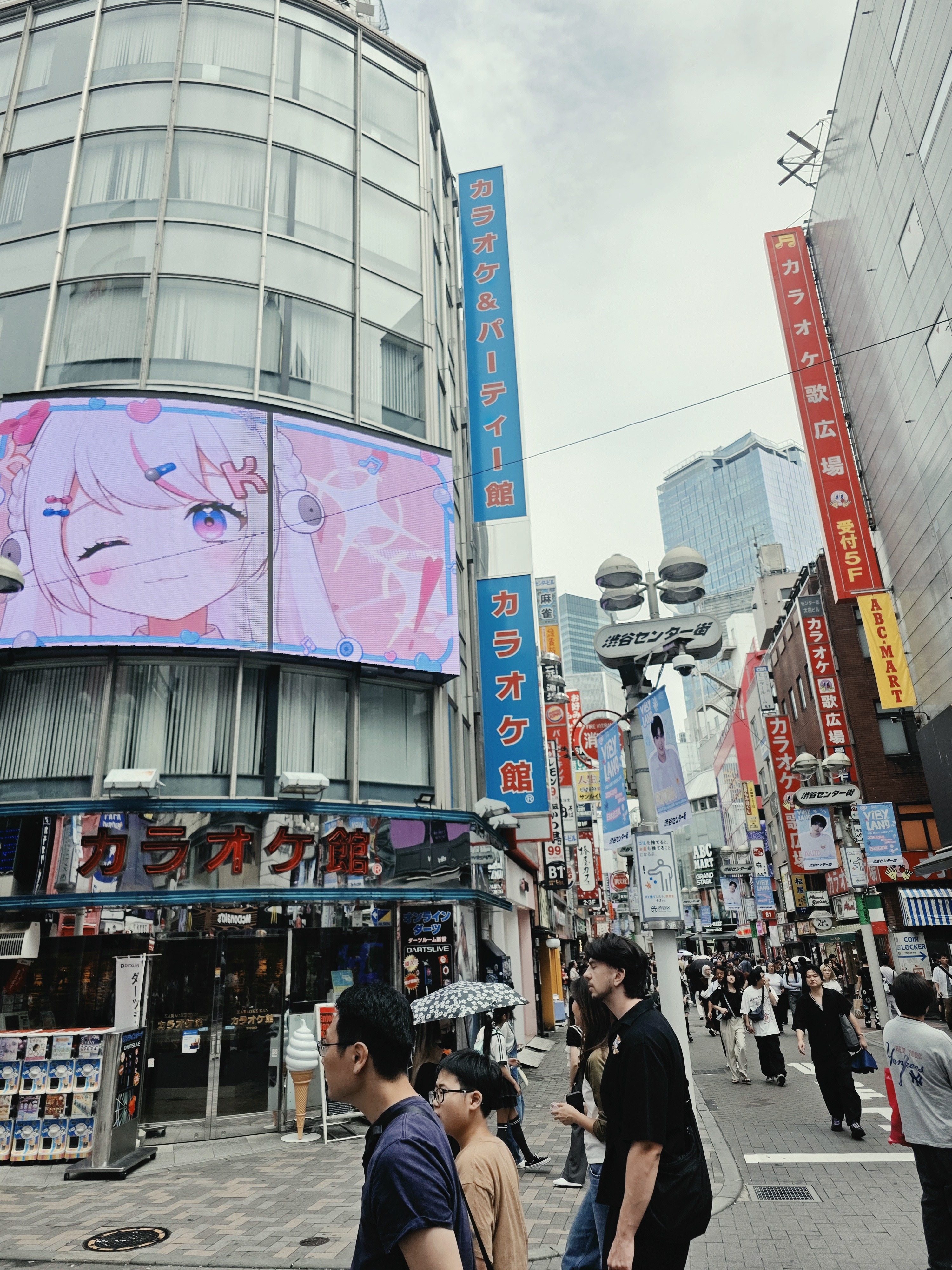
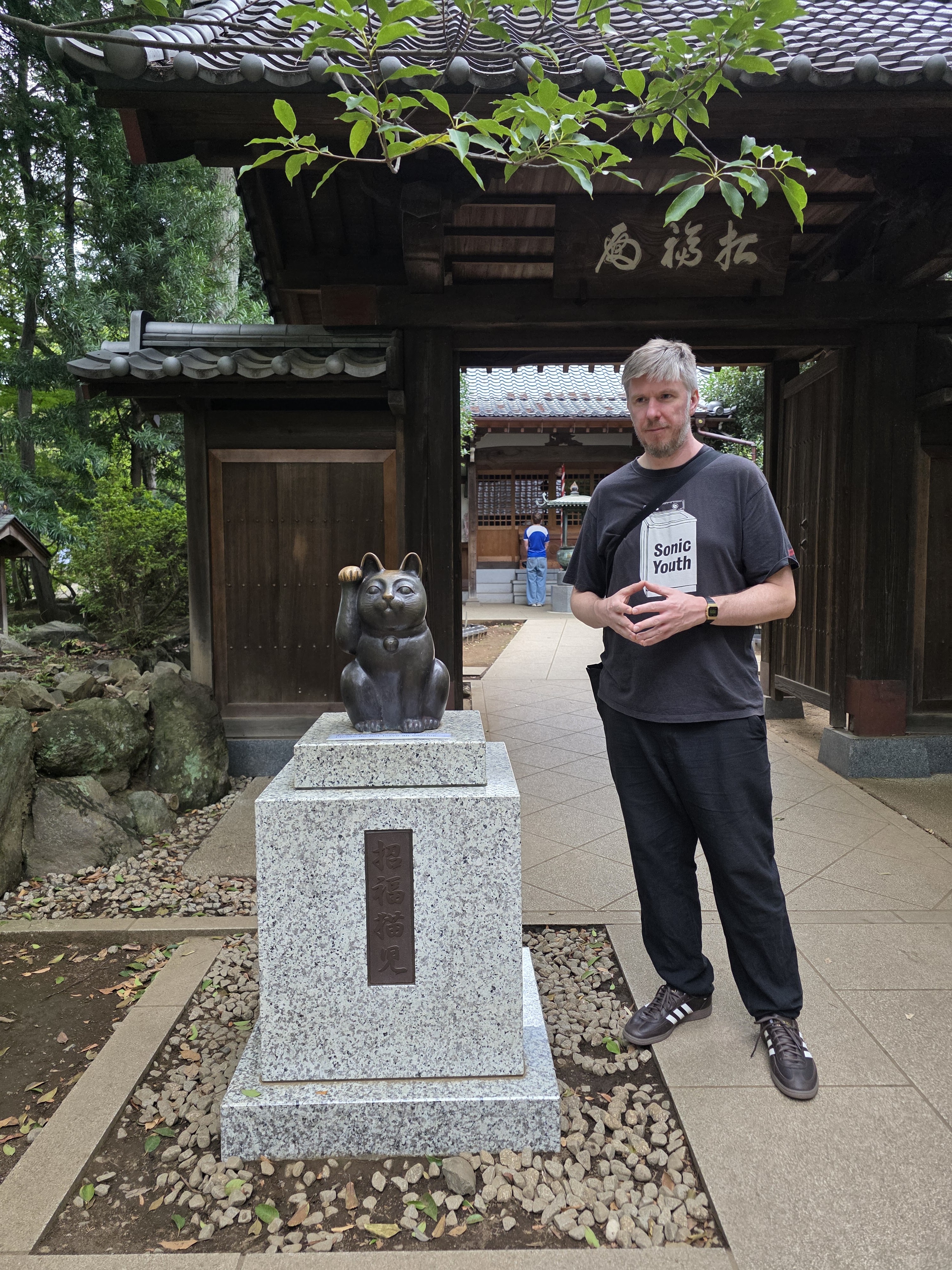
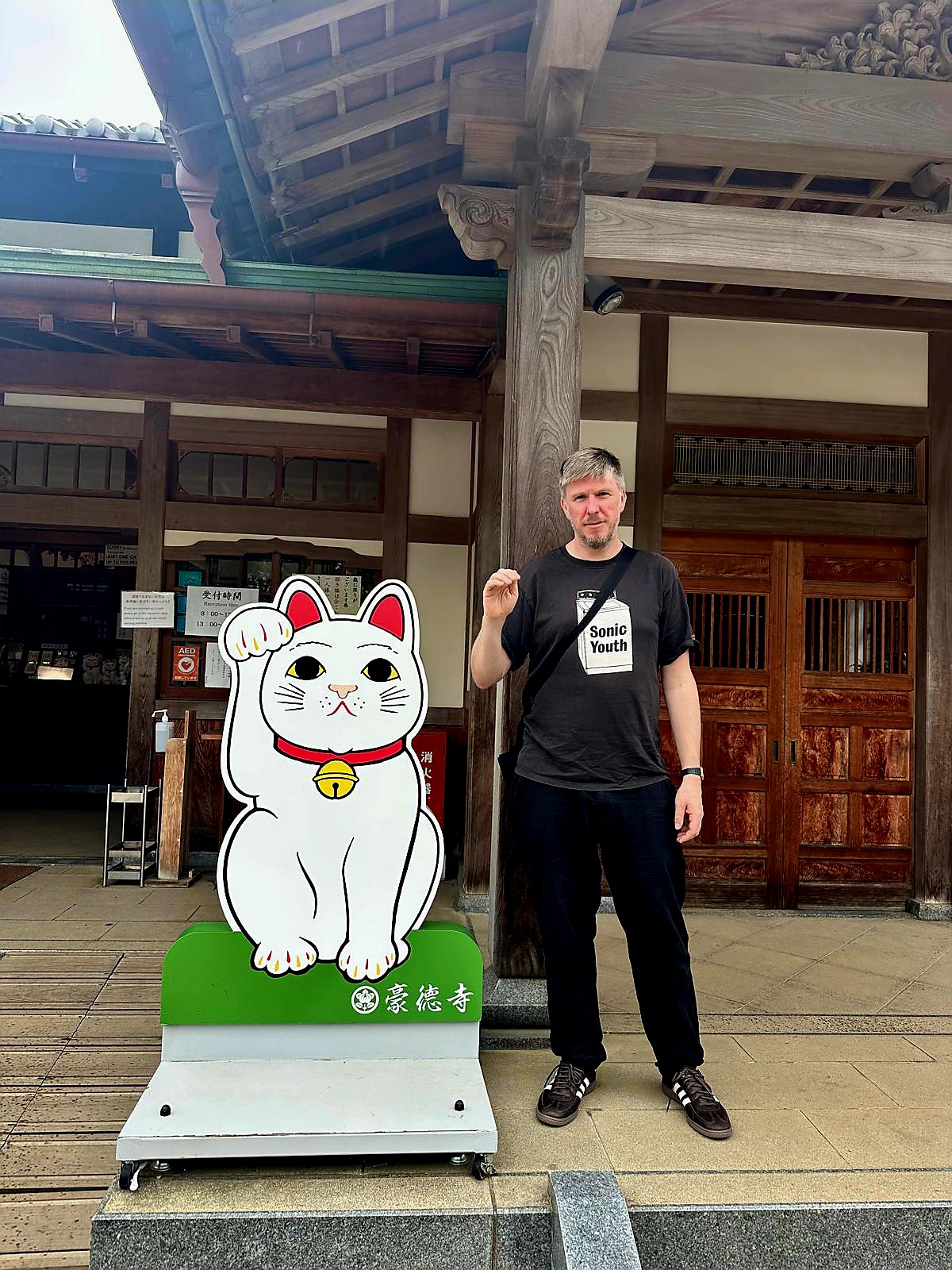
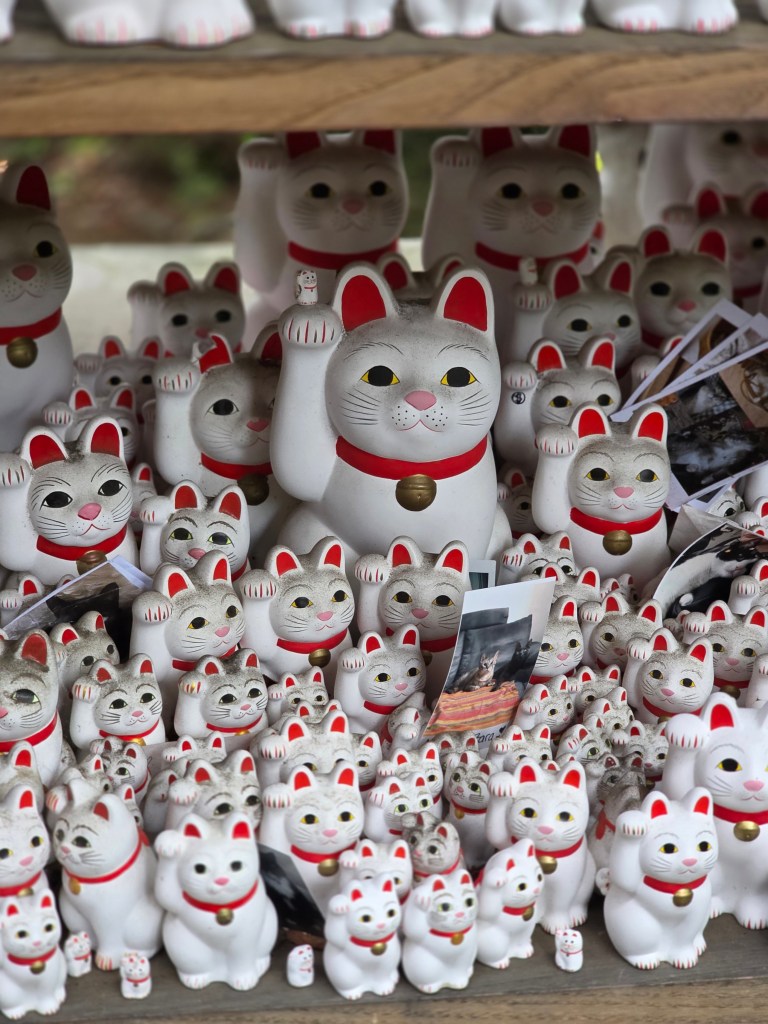
Where to start in Tokyo, an overwhelming city made of scores of smaller cities, the most famous being Shinjuku and Shibuya, all held together by an intimidating circuit board of trains moving millions that close about 12:30 AM? Miss this deadline, and you may be forced to take shelter in an all night ramen/karaoke bar or the massive public baths of Thermae Yu in Shinjuku. All good options to be fair. One thing I find about Tokyo is that it isn’t especially beautiful in the way that let’s say a Mediterranean city with medieval walls and piazzas might be. Fair enough, this may be due to the extensive renovations carried out by the Great Kanto earthquake of 1923, and later by a fucktonne of allied bombers. But, through a blend of design, craftsmanship and a love of the over-the-top, the street views are endlessly entertaining and you can spend a good time just trucking around regular streets, gaping up at the signs, lights, logos and mascots. There’s a long tradition in Japanese art of having these cute characters — on our first day, suffering from extreme jetlag, we go to the Gōtoku-ji temple, home of the famous beckoning cat statues (Maneki-Neko) you see everywhere in restaurants and takeaways, dating from the 17th century. (see below). The inspiration is said to have come from a wandering samurai who, on seeing a cat wave at him ( totally normal), he took shelter in the temple, avoiding a deadly typhoon.
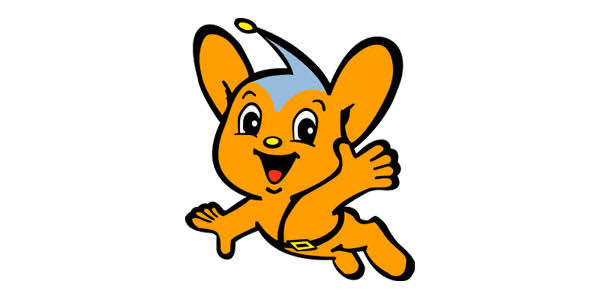
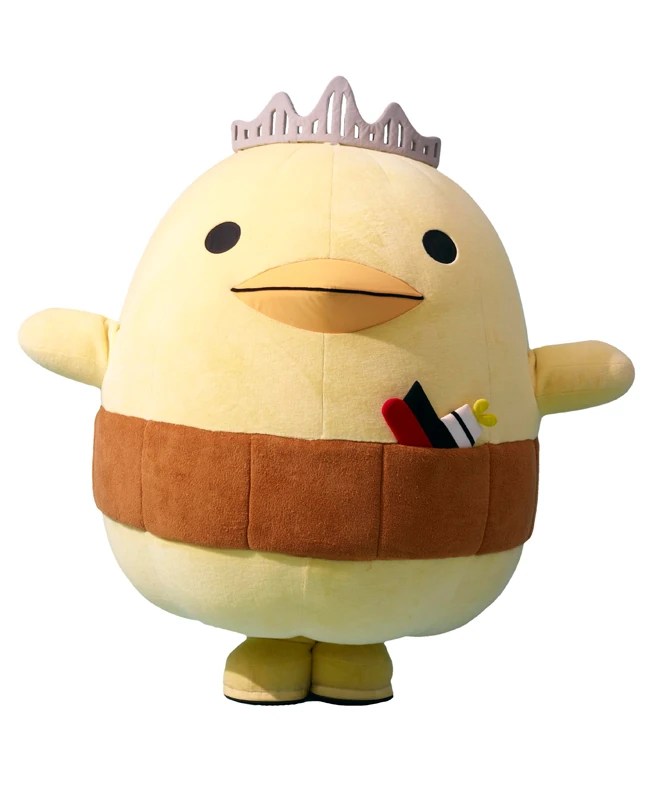
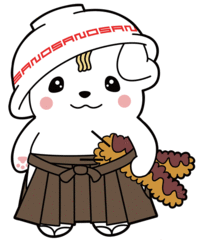
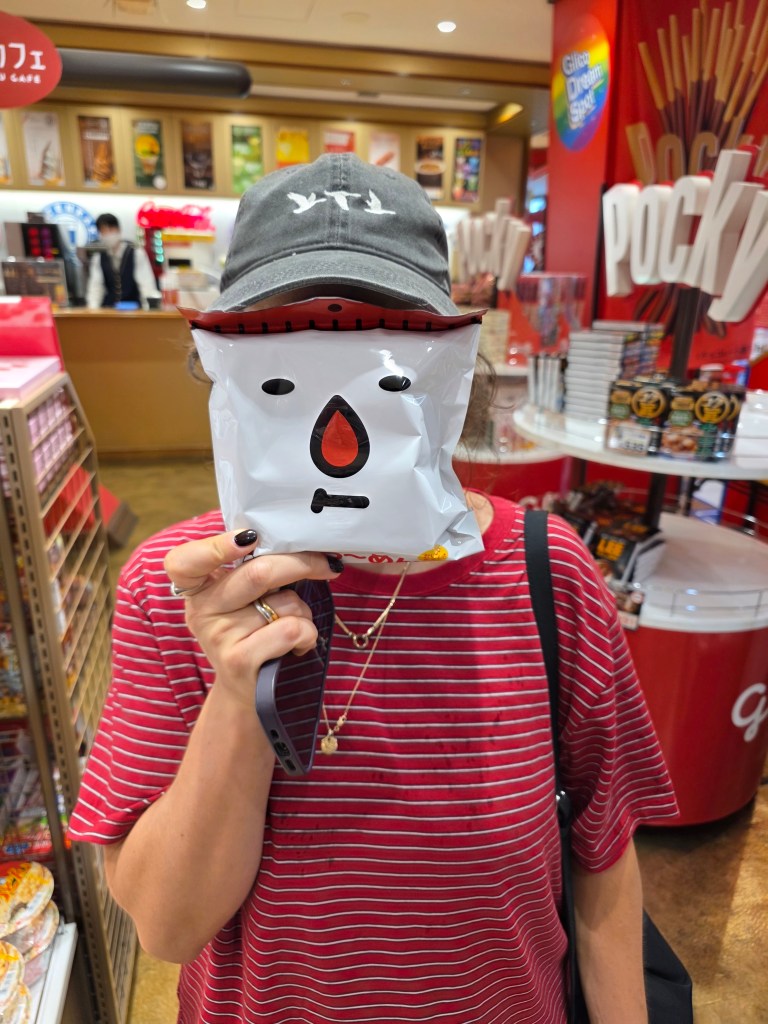
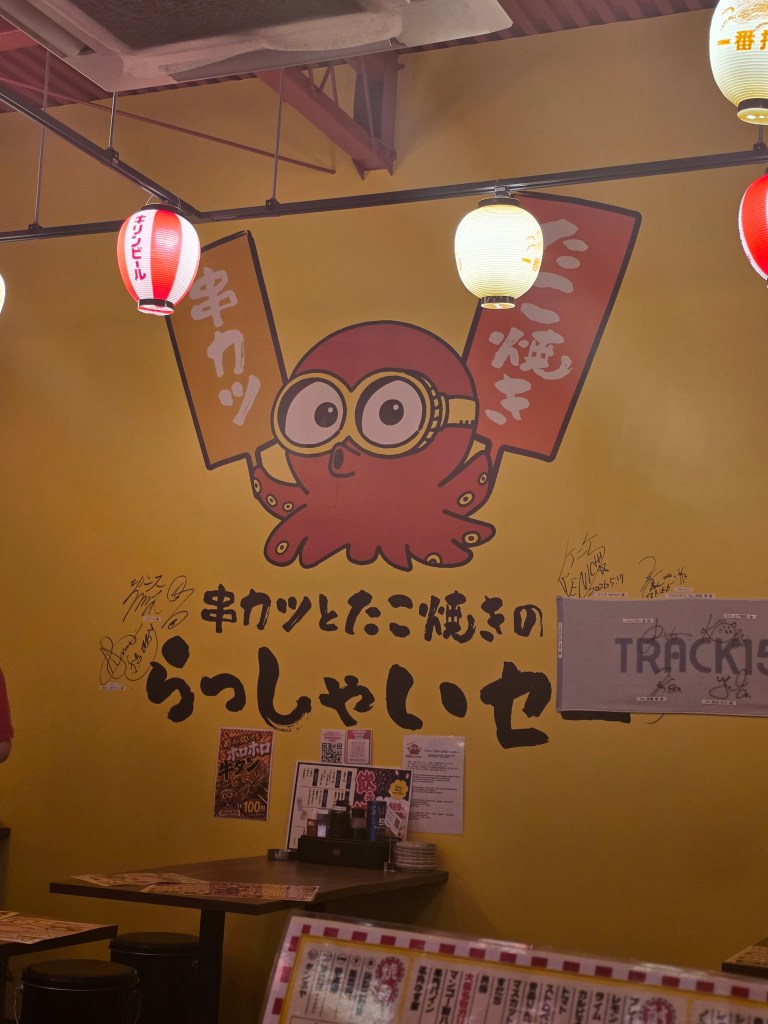
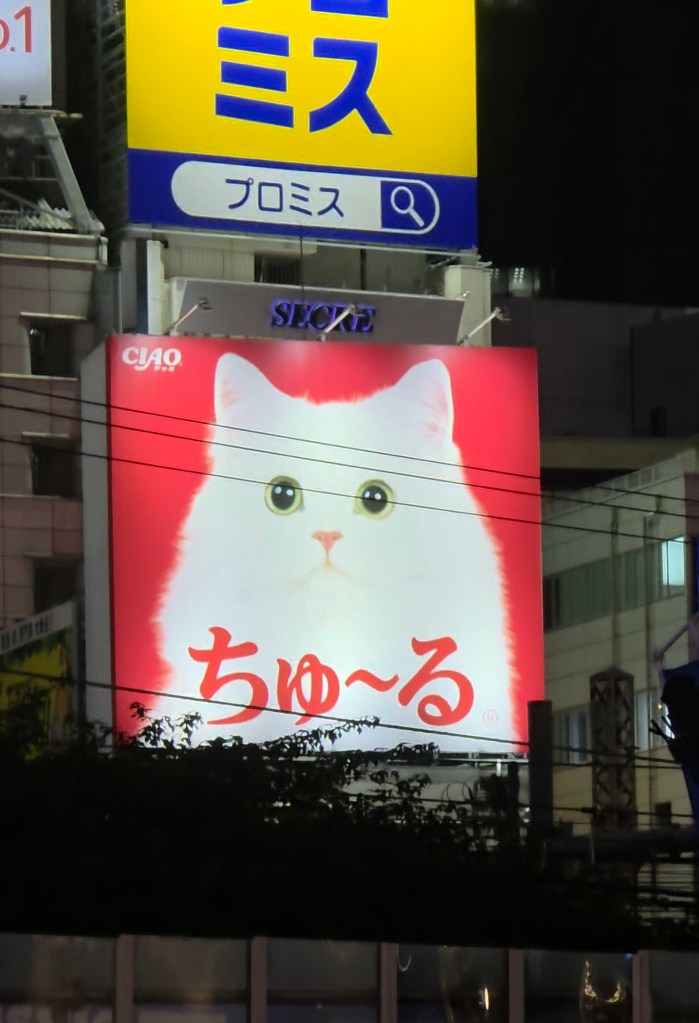
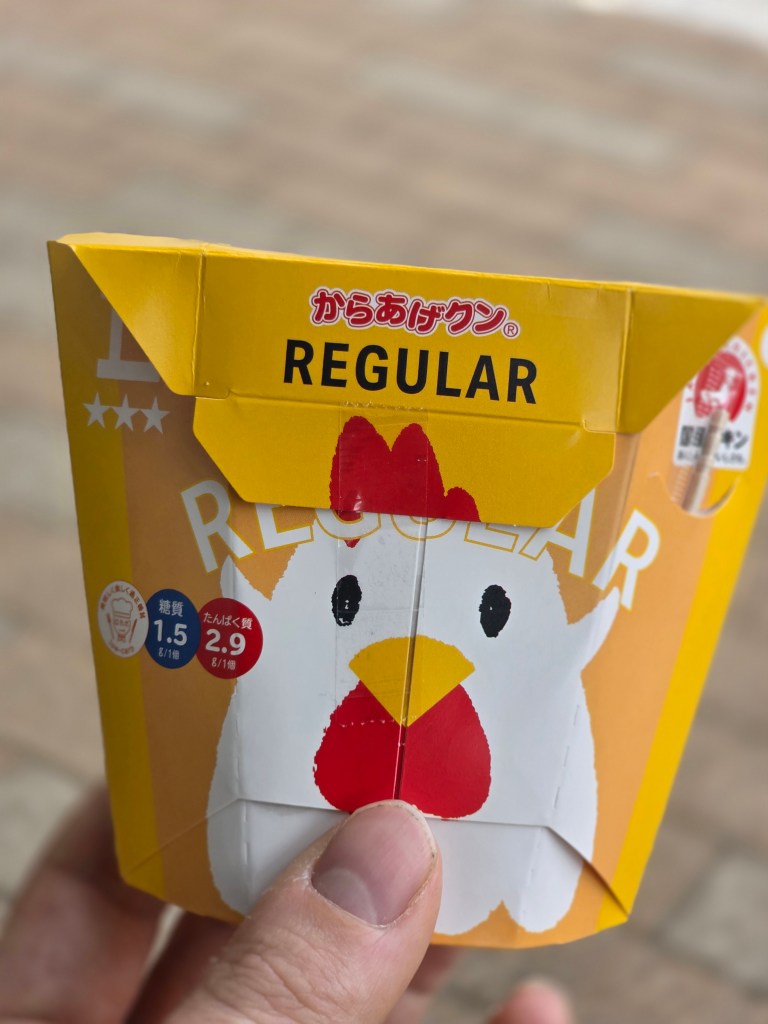
Such displays bring a lot of joy to the otherwise greyish surroundings. We should have more of this kind of stuff at home, brighten the place up a bit. Even though they’re about 70 years old now, the Guinness Mascot drawings of John Gilroy were crucial in establishing Guinness’ rep as marketing titans and are still beloved. Despite their continued appeal, no one has replicated anything as long standing. Perhaps they should ask some Japanese brands for inspiration? The amount of hilarious characters and logos for all sorts of officious bodies is a constant source of mirth, enlivening the most sterile corporate environments. The Tokyo police mascot (above left) doesn’t exactly strike fear into the hearts of the criminal underclass, but I like him. And every region and prefecture of Japan has their own mascot, called Yuru Kyara, my favourites being Bari-san, a rotund yellow duck wearing a bridge as a hat and a wallet shaped like a ship,( see above- the one that looks like a duck) and Sanomaru, a samurai dog wearing a ramen bowl as a hat, hair made out of noodles.(see above – the one with the , yeah you get it …) The desired qualities of a successful mascot are as follows :
- they should have an ability to convey their hometown
- their movements should be awkward
- they should be unsophisticated.
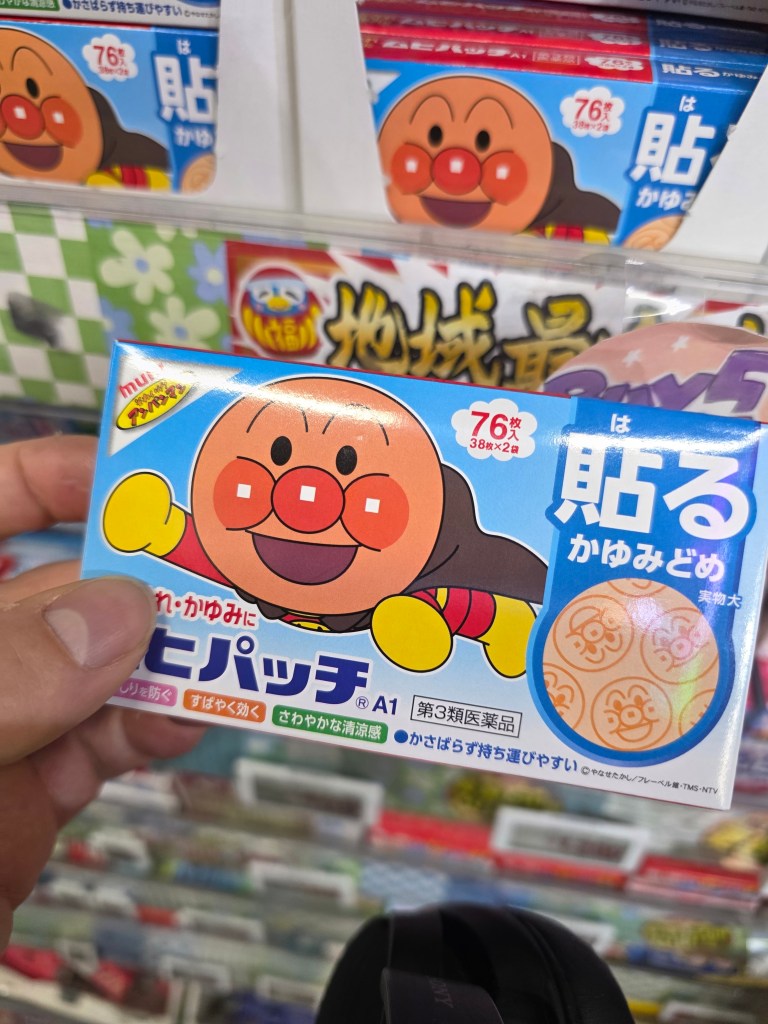
– which incidentally are the exact same requirements to be a mid-to-late-thirties-regional GAA centre-forward. Rather than dismissing these creations as kawaii overkill, it’s worth noting that usually there’s substance to some of these little buggers, like my favourite, Anpan Man,(bottom right, below) the bread-faced superhero created by Takashi Yanase. Based on the author’s experiences of postwar food shortages and hunger, Anpan Man ( named after the anpan, a red bean cake) feeds bits of his own face to hungry kids in a Christ-like manner, as taught to him by his creator and source of all knowledge in the universe, Uncle Jam. Good (anpan) man yourself.
Japan is changing though, and a lot of the weary stereotypes no longer apply. For the first time, the country has a female Prime Minister, an important change in a nation where female representation was histroically low. There’s also a generous paternity leave scheme- alas uptake is low, as workers remain recluctant to take advantage- some habits are hard to change. There’s the Cool Biz Campaign designed to reduce air-con bills, meaning salarymen are no longer forced to wear jackets and ties and can wear short sleeve shirts in the office.That’s Cool Biz! English is now spoken more than ever, as tourist hordes arrive with extra luggage to take advantage of the weak Yen and Japan’s amazing product range. Shopping is never usually part of my itinerary, but such is the range of goods on offer, in addition to kitchen knives from the Kitchen district Kappabashi, novels from the Book district Jimbocho, fake plastic foods (sampuru) from the fake plastic food district and official Family Mart socks from the ubiquitous corner stores, we also buy a range of good luck amulets from various shrines- naturally several of the classic waving cat statues and the iconic red daruma doll (more on later). It’s good to see that the Japanese share the belief in good luck charms like we Irish do. Solidarity.
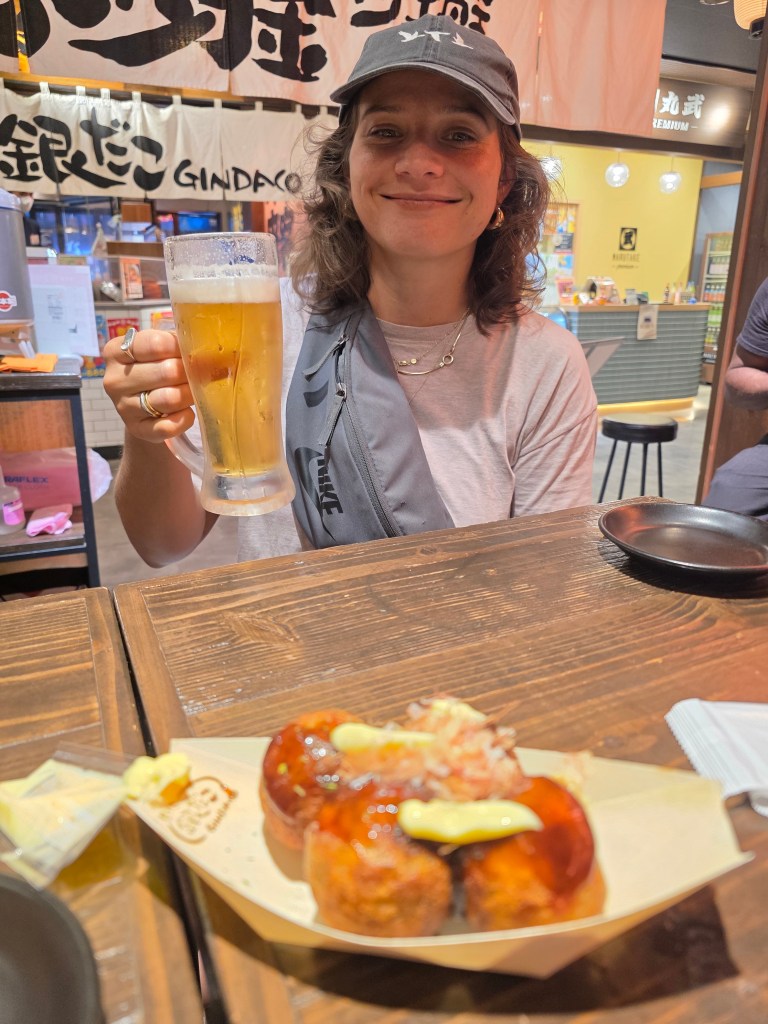
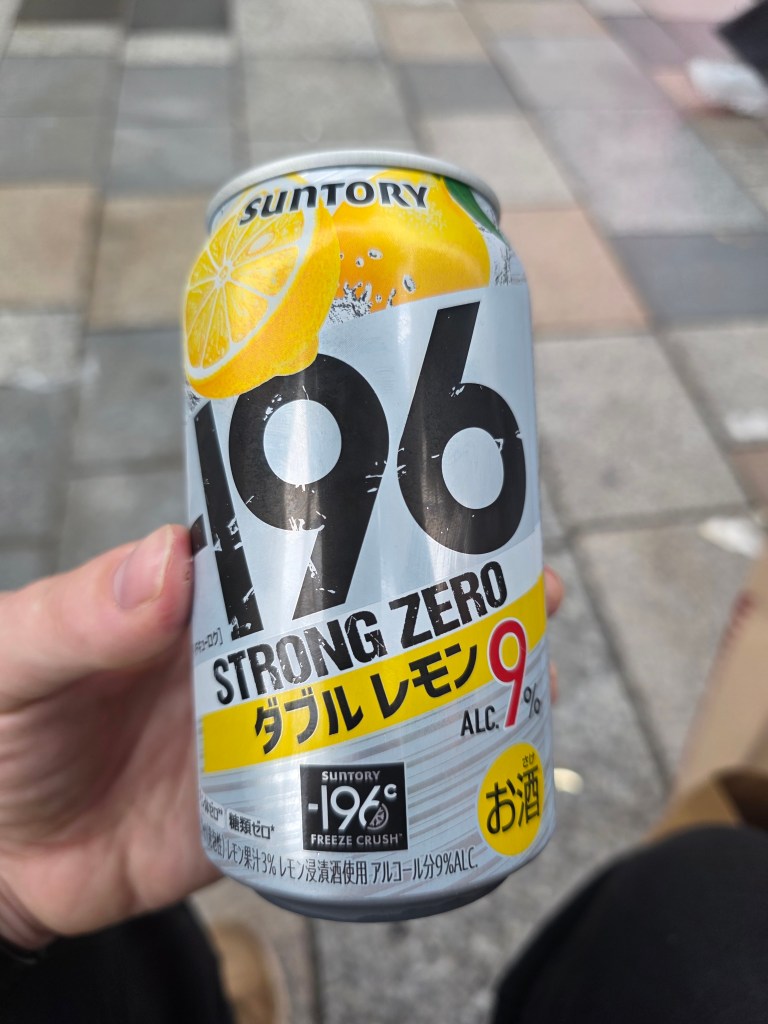
But we’re here for business! Drinking in Japan is a complex, stuctured and multifaceted affair. In addition to cold, frothy pints of Sapporo or Asahi, they are big into their highballs — spirit and mixer drinks that deceptively mess you up, none more so dangerous than the infamous “Strong Zero”, the 9% lemon highball available from every konbini (convenience stores) located at a ratio of about 100 outlets to every 5sqm. Rather than pubs, they have the excellent Izakayas, with their tell-tale red lanterns outside, a mixture of drinking dens and bar food vendours , this being Japan the bar food being some of the best you’ve ever had — yakitori skewers of chicken and offal cooked over charcoal, or sushi, or karaage fried chicken. Tokyo itself has tens of thousands of izakayas, bamboozling you with choice. All you can drink options- Nomahoudai- are common, offering thirsty post-work punters unlimited pints and some with their own sake taps direct to your face! On most holidays, I go to the Irish pub not only for commitment to the bit, but for the practical reason that there aren’t a lot of alternatives – drinking just isn’t a priority. Not the case in Japan. From their Celtic topping whiskey, to the aforementioned 9% highball cans, to the inviting red lights of the izakaya lanterns, Japan can go toe to toe with Irish drinking culture. Nomikai is the tradition of a ‘drinking party’ — the very Irish-coded after work drinks that lubricate corporate cohesion and sustain the late-night karaoke industry. Less compulsory than before, but still important, these sessions allow for bureiko, a kind of cultural safety valve that during the sesh, you speak your mind without consequence, as normal rules don’t apply for that brief, glorious pissed-up moment. As with elsewhere, no doubt such practices are under threat by the world’s punchbags and generational sad-sacks, Gen Z……
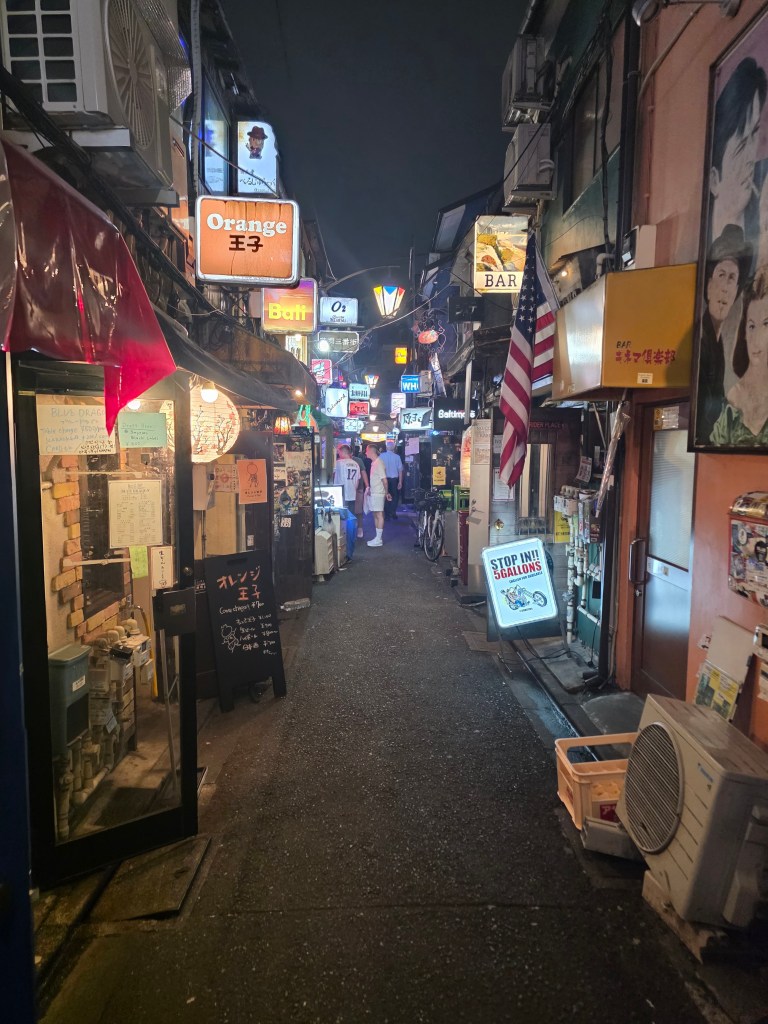
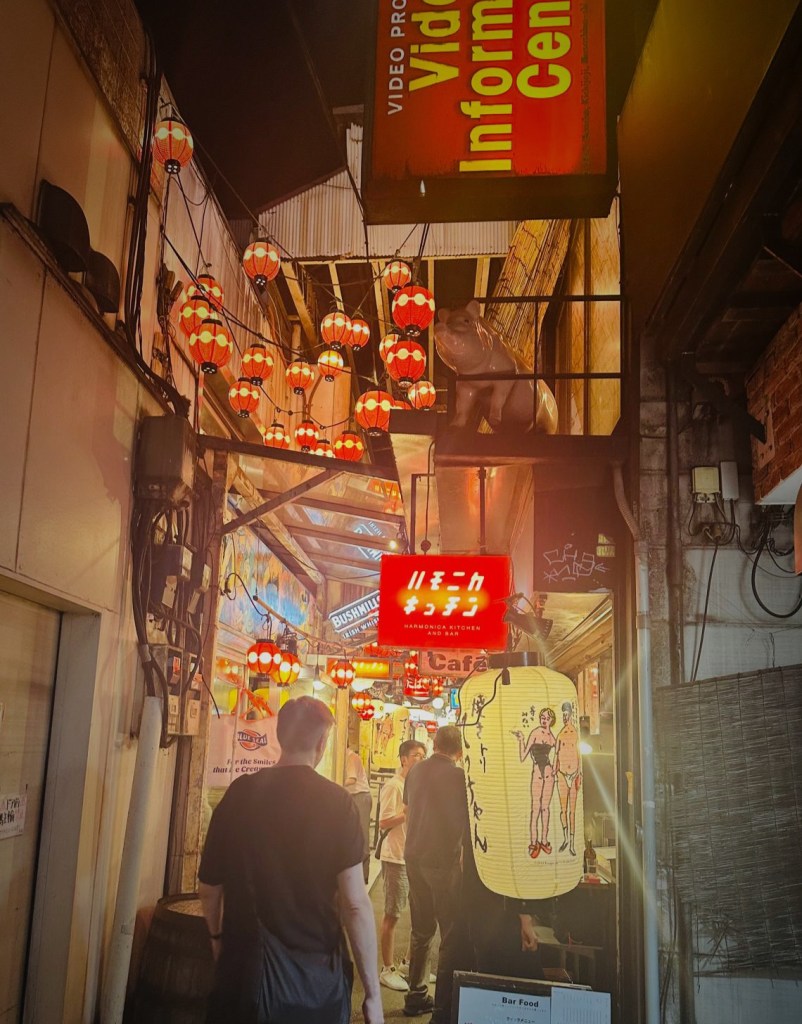
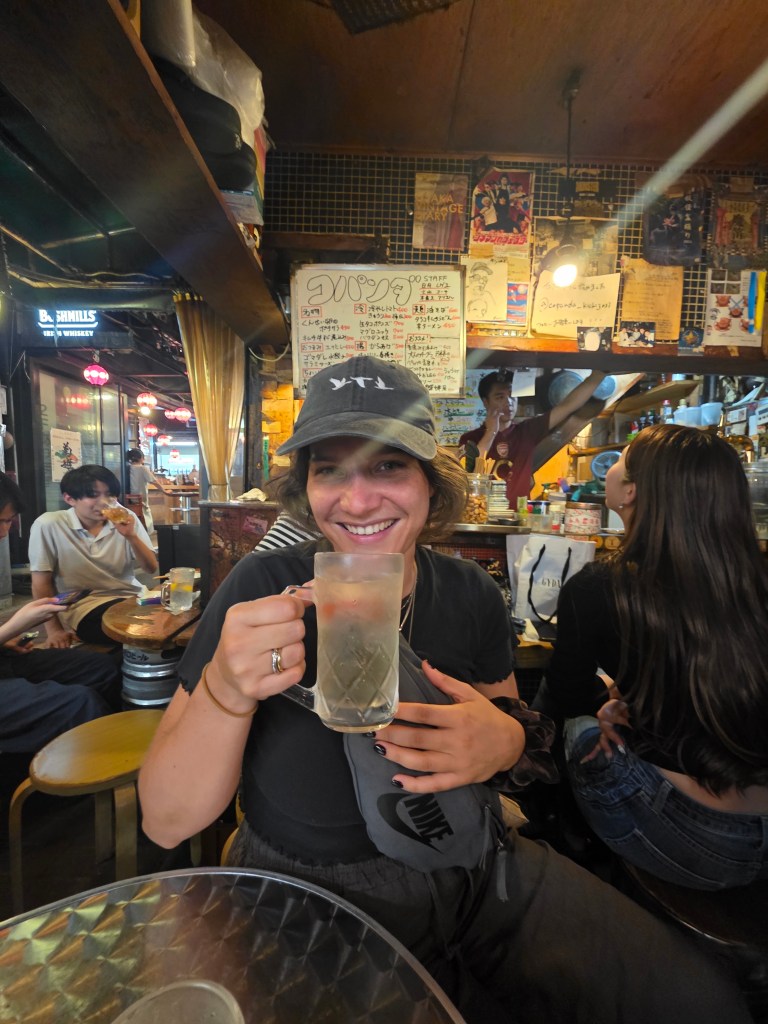
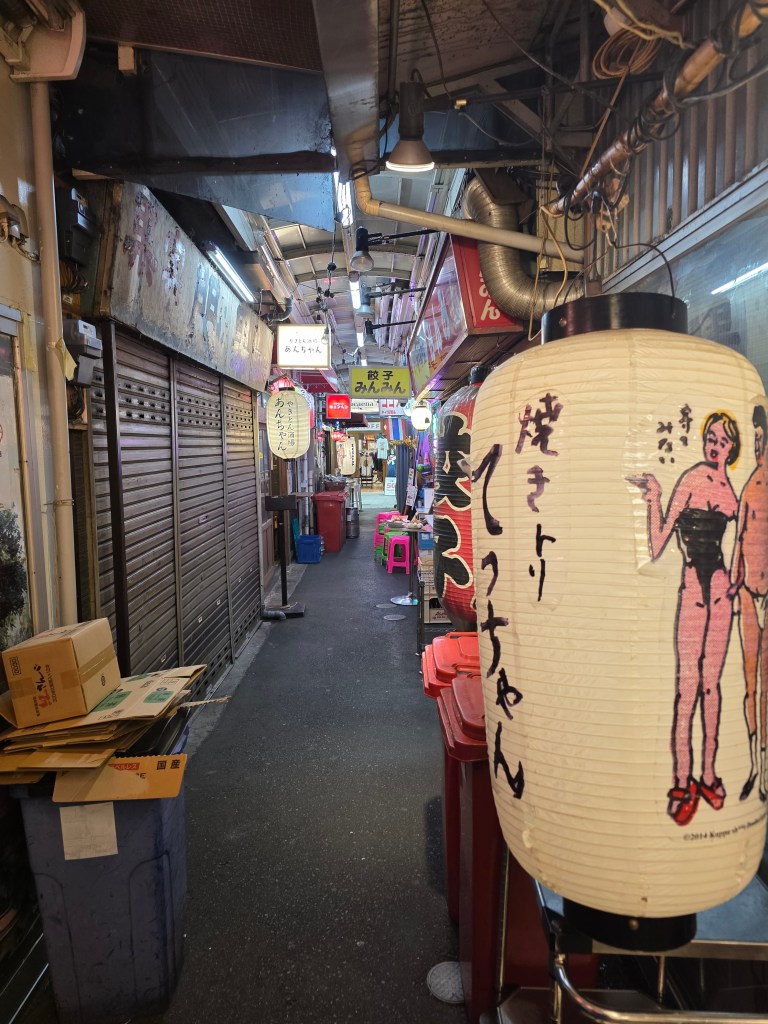
Once upon a time, the top spot for late night shenanigans was Golden Gai. Beloved of Bourdainophiles, Golden Gai was a kind of post-World War 2 blackmarket rogues-nest that grew into a legendary night destination for lost souls or those who missed the last train home. This compulsory spot for late night debauchery is a warren of teeny, tiny matchstick bars cramped into shoddy shacks, a shanty town of cocktails, smoking and overpriced highballs. I have to admit, I find the place disappointingly controlled — many bars charge entry fees, or drinks at set inflated prices. Some advertise locals only, tired of curious daytrippers. The area has a preponderance of American accents, lumbering groups squeezing themselves into each nook. There was probably a time when this was the coolest shit ever, but for now it’s a bit jaded, like visiting modern-day Greenwich Village or Tangiers, knowing that you missed them at their peak. We go to one bar and settle down next to some Canadians. Very quickly, it emerges they are of the right-wing edgelord diversity-is-a-sham persuasion, including a few comments that I cannot put down due to their spectacularly racist nature. I thought Canadians were supposed to be the nice ones. “Hey dude, do you think Japan is so safe ’cause it’s an ethnostate?” he asks, a leading question that’s going in a bit of a eugenics-y direction I don’t appreciate. “Ireland was pretty much an ethnostate for years and Dublin was still as rough as fuck” I proffer. The Canadians muse upon this response, before going on to overgeneralise that migrants ‘aren’t willing to die for their country’, as if anyone is going to try and invade Canada to seize the lucrative maple syrup reserves. Hmmmmm. For similar options to Golden Gai, there’s also ‘Memory Lane’ — poetically also known as Piss Alley. But for my money, the better option is Kichijoji, and Harmonica Alley, a similarly tightly-packed sprawl of bars and eateries where the staff actually welcome you in, with mostly locals manning the standing bars, drinking vertically to begin with before becoming ever more horizontal with each sake. All the fun minus conversation about racewars.
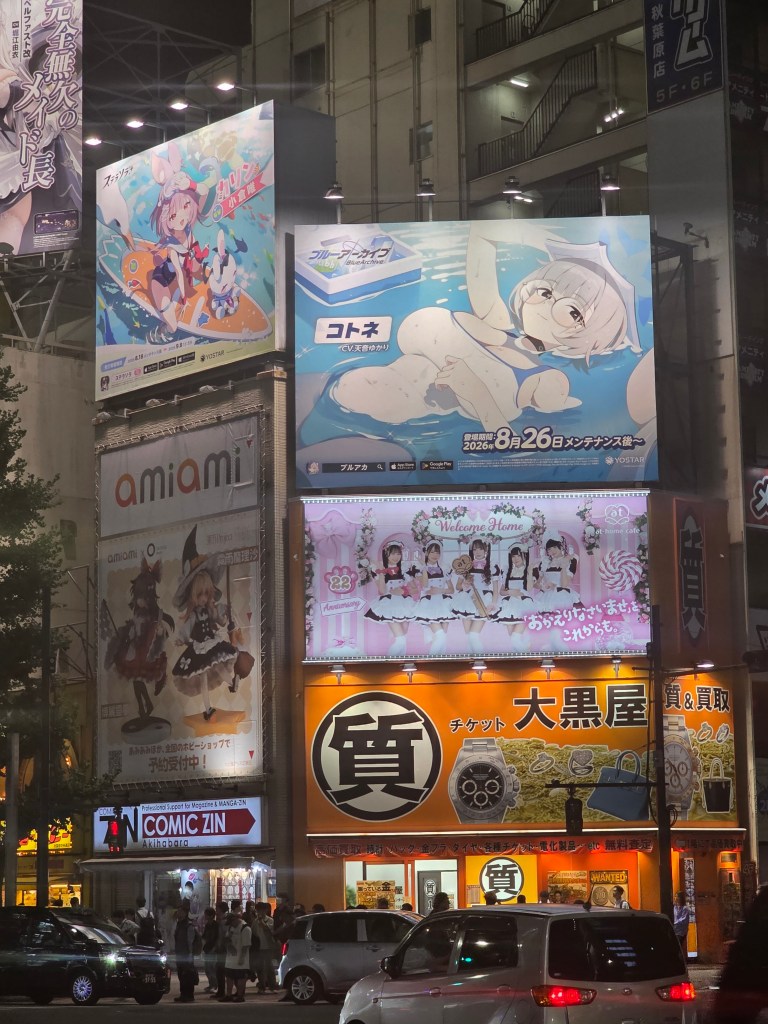
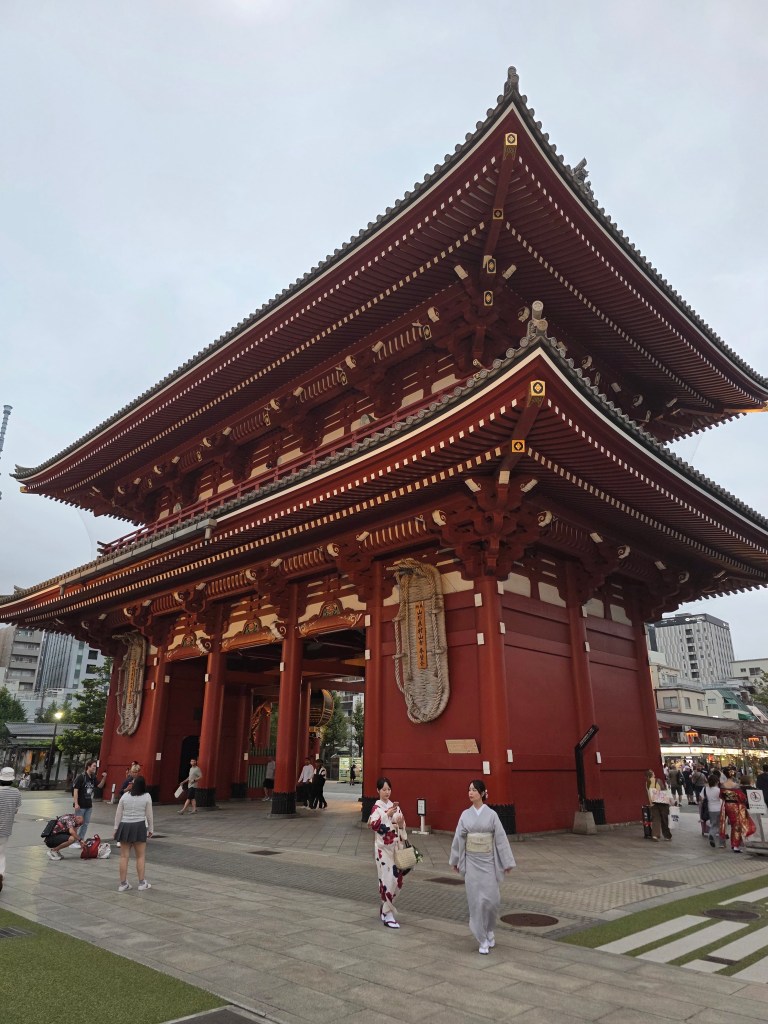
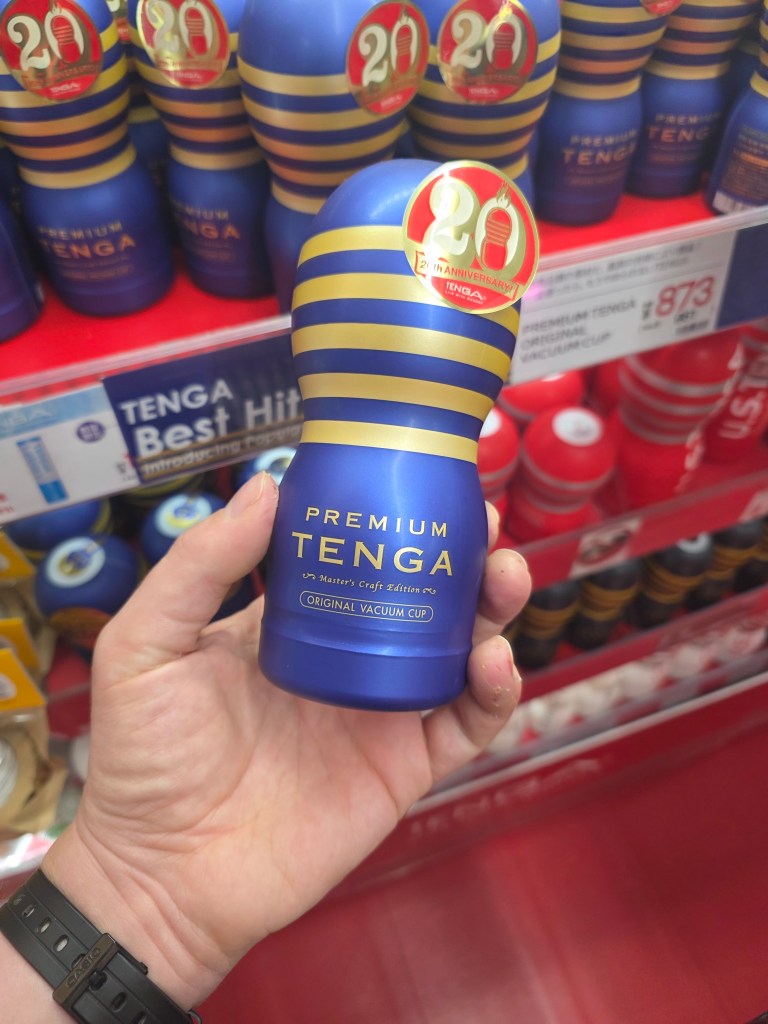
The point about low crime rates is interesting, granted. For all the nightly hi-jinks outlined above, it is predominantly calm for a city of this size. But, we learn it is hard to pigeonhole Japanese society, coming as it does with many contradictions. Alongside Giant 3D robot adverts leaping out at you, making you feel like those idiots who thought the train was coming out of the films circa 1896, you also have the continued use of fax machines, paper money and even coins. Parallel to the solemn contemplation of the Shinto shrines, you’ve got the range of branded jack-off tubes in Don Quixote, a 6-storey pound shop fronted by a blue penguin with a Santa hat. A culture of respect and dignity of zen-like restraint alongside all-you-can-drink, 9% whiskey highball nights. So fascinated are we by Japan, offering as it does a simultaneous contradiction of familiarity and unfamiliarity, we end up exaggerating the differences when we see them. This can also lead to some over-sentimentalising of the culture , perhaps out of exoticism ‘In Japan, society is so considerate’, there’s no litter / there’s no crime / so respectful / trains run on time’ ; like a novelty land of social cohesion with some mild sexual perversion thrown in. No wonder white alt-right males love it. But, again, contradictions abound, as I find out to my peril by nearly accidentally getting on a women-only carraige in Ueno station, only realising my error halfway in the door.
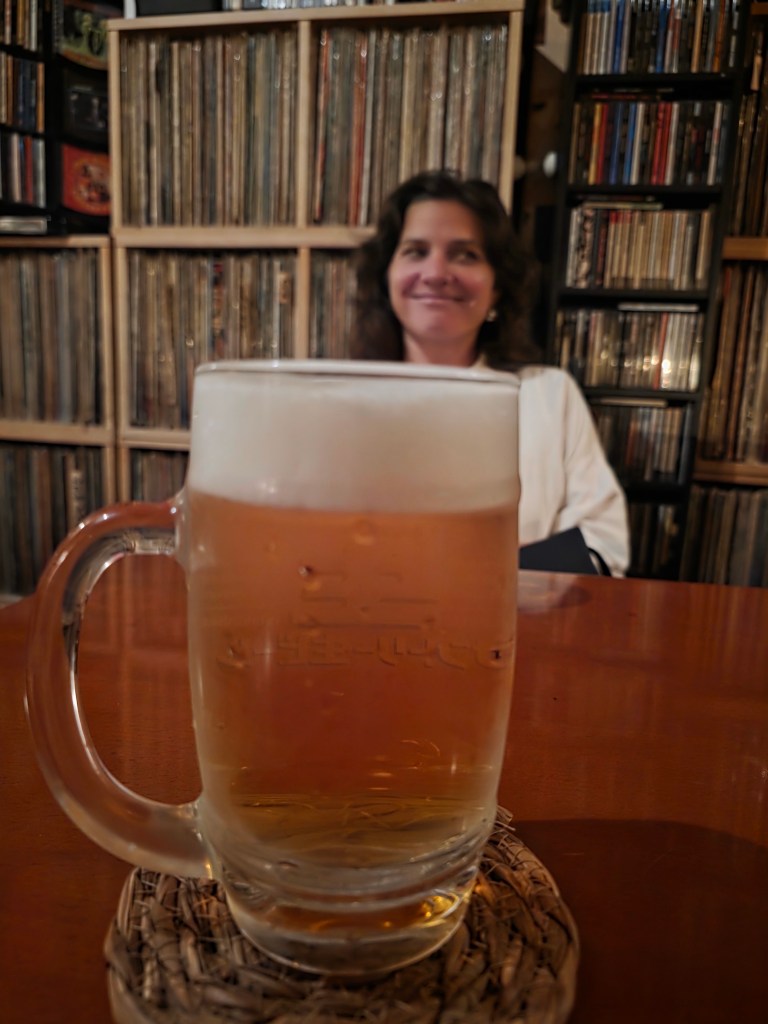
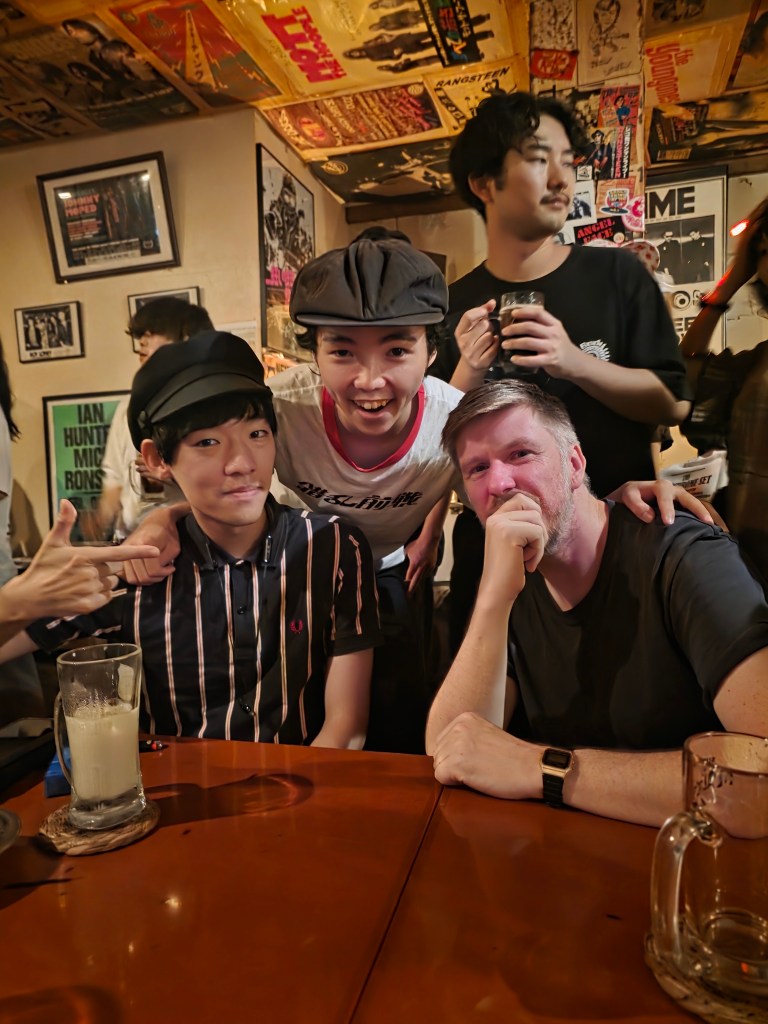
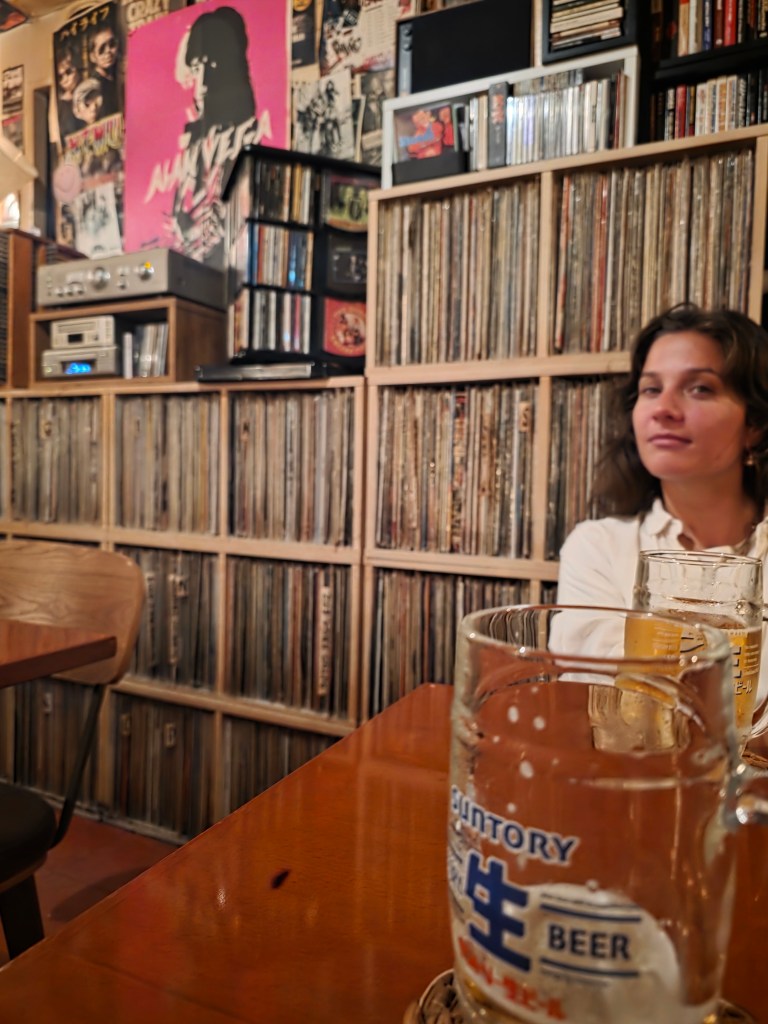
We stay in a belter of a spot called Shimokitazawa, not far from Shibuya. Known for its vintage clothes markets and alternative music scene, it’s a bit like Camden if it was actually good. One evening, we have the good fortune to come across an inviting street sign advertising a drinkery called The Poor Cow. Up four flights of stairs, we open the door to a solitary room that reveals wall-to-wall stacked vinyls, a haze of cigarette smoke, locals packed in together and a barman permanently wearing shades. While here, we strike up a conversation with two young local musicians, the instigators behind a rough n’ ready punk garage band called The Dirty Rogues. “I know Ireland is different from England” proclaims Konosuke, the lead singer, instantly endearing himself. “You have Undertones, Stiff Little Fingers,” The enthusiastic frontman proclaims his key influences to be Iggy Pop and Ian Curtis, so we christen him the Japanese Iggy Curtis and he does a little dance a la the Joy Division frontman. Great bar, great people, great craic.
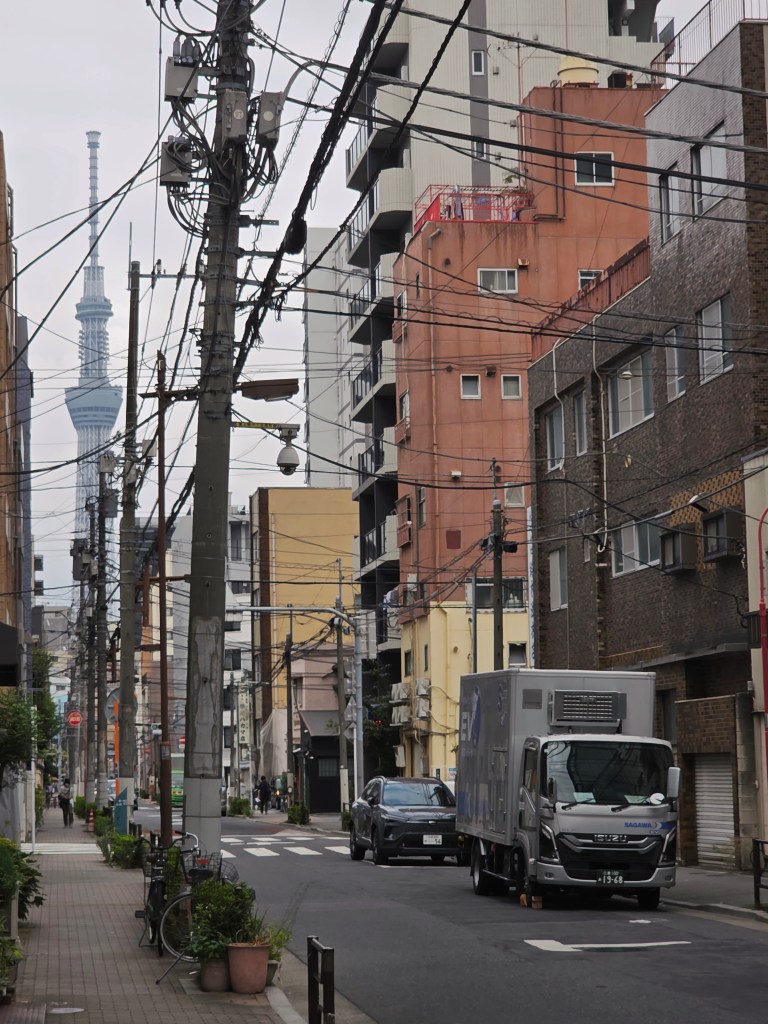
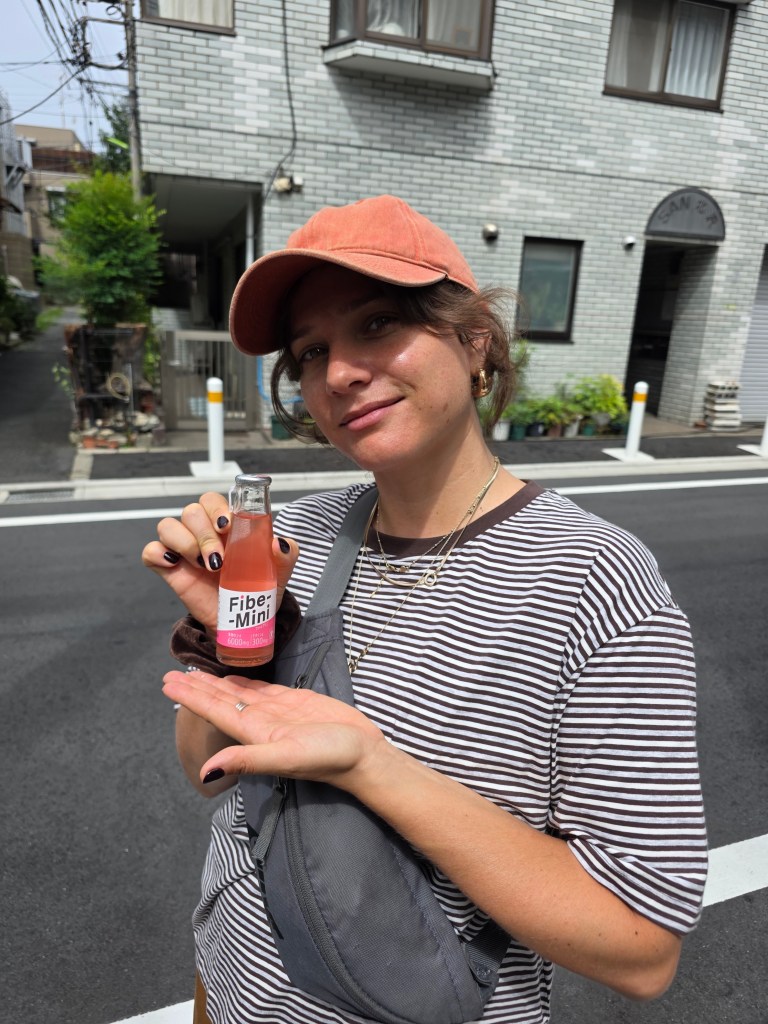
After a tough night out, still reeking of stale fag smoke, you have a couple of options for recuperation. Every konbini has a range of magical elixirs and health potions offering all kinds of miracle cures — vitamin C pouches, caffeine infused mystery bottles and a ginger & turmeric drink you have before the sesh to protect your liver. Sceptical, I try one in the name of experimentation, and the next day I must admit I feel ok. Could have just been the bloody big bowl of steaming pork ramen though. Another option is the sento, the traditional Japanese public baths, like the ones in the background of the E.Honda stage in Streetfighter II. These baths are taken fully in the nip, and I can say with utmost certainty that on this trip I have seen the most schlongs in the history of all publicanenemy trips. So far anyway. The sento tradition dates back to when people used communal baths as makeshift showers, and the tradition is continued, still as butt naked as it ever was. I enter the sento as a lone tourist, careful to blend into the surroundings and adopt the tried and trusted technique for any traveller- just do as the locals do. So straight off with the jocks as I spend a good 30 mins scrubbing myself squatting on a wee yellow basin before sampling the natural springs. I see a colleague hose down his basin after use, so I do likewise. While in the baths I use my one Japanese sentence I have committed to memory with an older patron – “Watashi wa Airurando-jin desu”- ”I am from Ireland”. Due to my excellent intercultural skills, I appear to have blended in with the locals seamlessly. Bathing totally butt naked with a load of dudes is how God intented it , and I am loathe to going back to swimming in shorts like a prude.This particular sento we visit is unusual in that it allows tattoos, again showing changing local attitudes, so Bella is allowed in despite her gangster associations of criminality. Tattoos famously were long forbidden due to their association with the Yakuza, Japanese organised crime families. The name yakuza is said to come from a losing hand in the card game Oicho-Kabu – ya-8, ku-9, sa-3, and many cases it led to losing of bits of hands, as members would cut off bits of their pinkies to atone for any misdemeanours.
In a megacity like Tokyo, one can find a range of specialised premises to cater for every whim and interest, depending on what you’re into or if you just don’t want to deal with actual people.The conveyor belt sushi chains, where beer is sped to you on a little train straight to your table from god knows where is a sheer joy, a must try experience for the hungry anti-social. There’s also Ichiran, one of the most popular ramen joints, where you can enjoy yourself in the broth-isolation booth, your food and service provided by faceless servers behind a bamboo veil. More niche, you have the trademark maid bars of Akihabara, the sizeable Otaku/geek district where a whole neighbourhood is an extension of those CEX stores with plastic figures and swords and junk. We have to mention the Robot cafes, the Capybara cafes and my personal favourite, the short-lived Tomodachi ga Yatteru Cafe- ”The Cafe Run by a Friend.” In this conceptual space, the staff were obliged to pretend that you share a long term acquaintance despite having never met you, (the waiting staff being out of work actors).The menu included beverages you would order as part of some bizarre faux-familiar ritual, so to order an apple juice you’d say “hey, is this the one we drank all summer?” It’s gone now. It’s worth bearing in mind that in any city of comparable size and economic standing — London, New York, you also have your fair share of wild and wacky venues, like the ill-fated Karen Cafe where all the waitresses were pains in the hole. I begin to think that they might have a soft spot for the ole Irish pub – a place you can go for solitary drinkin’ or to have random and slightly more natural chat with barstaff as you wish.
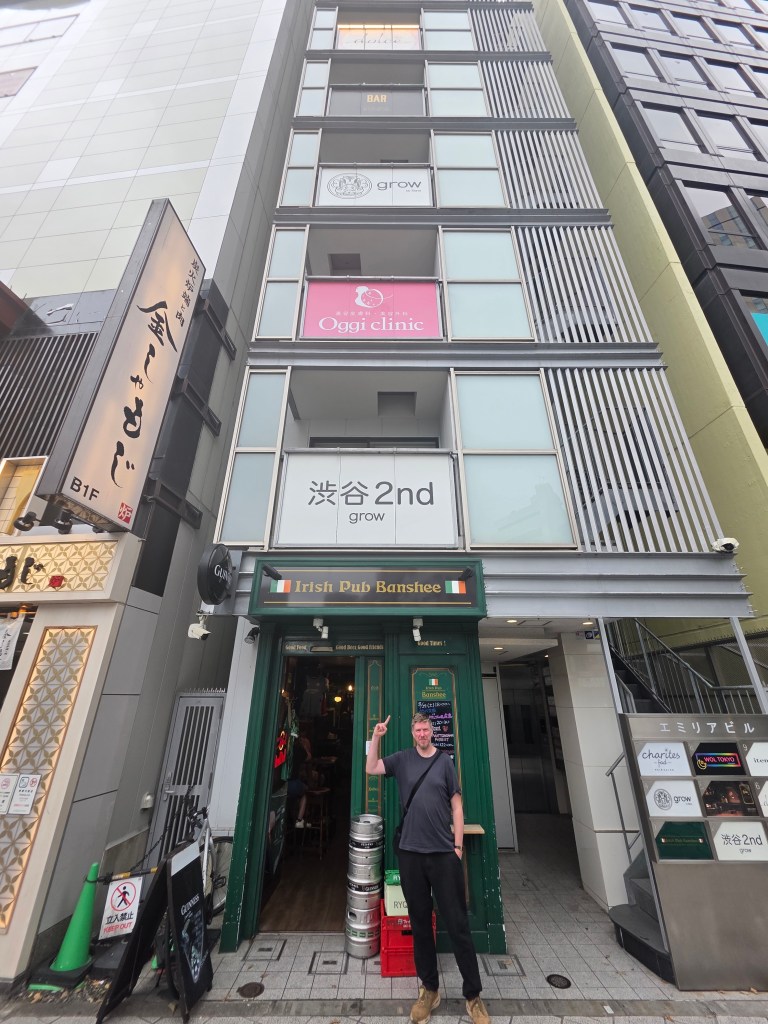
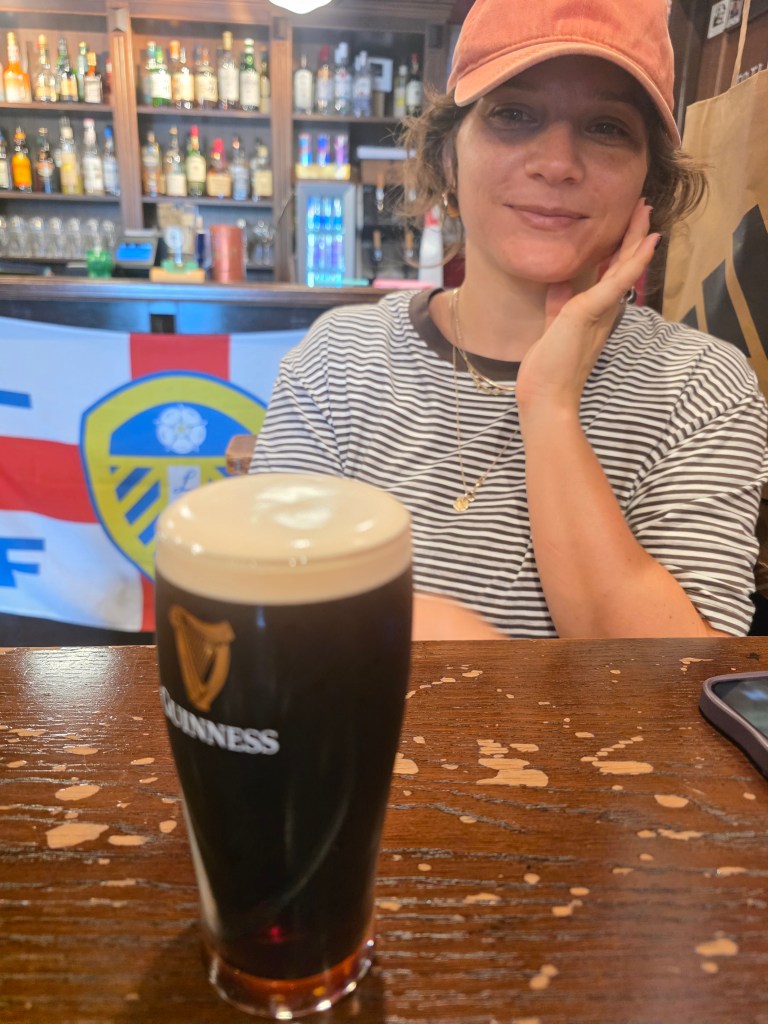
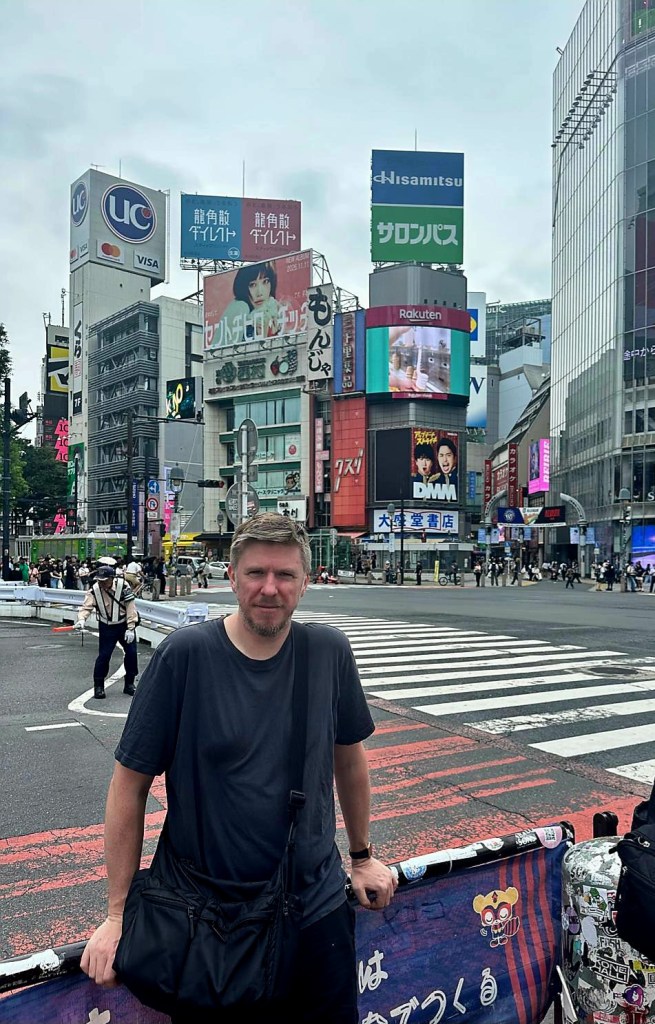
The first Irish Pub we visit is Banshee Irish Pub, Shibuya. Not far from the second most famous pedestrian crossing in the world, amid towering office blocks and a train station that handles over 3 million passengers per day, lies this inconspicuous one-room, blink-and-you’d-miss-it Irish pub. Compared to the immediate surroundings, it’s a wee oasis of calm that feels like it has no business being here in the CBD. Like most of the bars in this city, space is at a premium, so the Banshee is cozy, a one-room affair. The bar is football-centric — loads of shirts, flags and emblems from English, German and J-League teams. There’s no need for faux- familiarity with the genuinely lovely staff here as I know what I want and it ain’t apple juice.This must be the only pub in the world I have seen where the pints are pulled alongside a patented Guinness egg-timer for quality assurance and a decent drop. As my first pint in Japan, pretty good, albeit of course more expensive than local brews, naturally. Like Ireland, Japan has a keen sense of rural mythology, with spirits and ghosts a central part of the folklore. So a pub named after the Banshee, a ghostly apparition noted for her chilling wail, is probably apt. Also there was a level on Nintendo’s Super Mario Kart called ‘Banshee Boardwalk’, so they clearly like the concept.
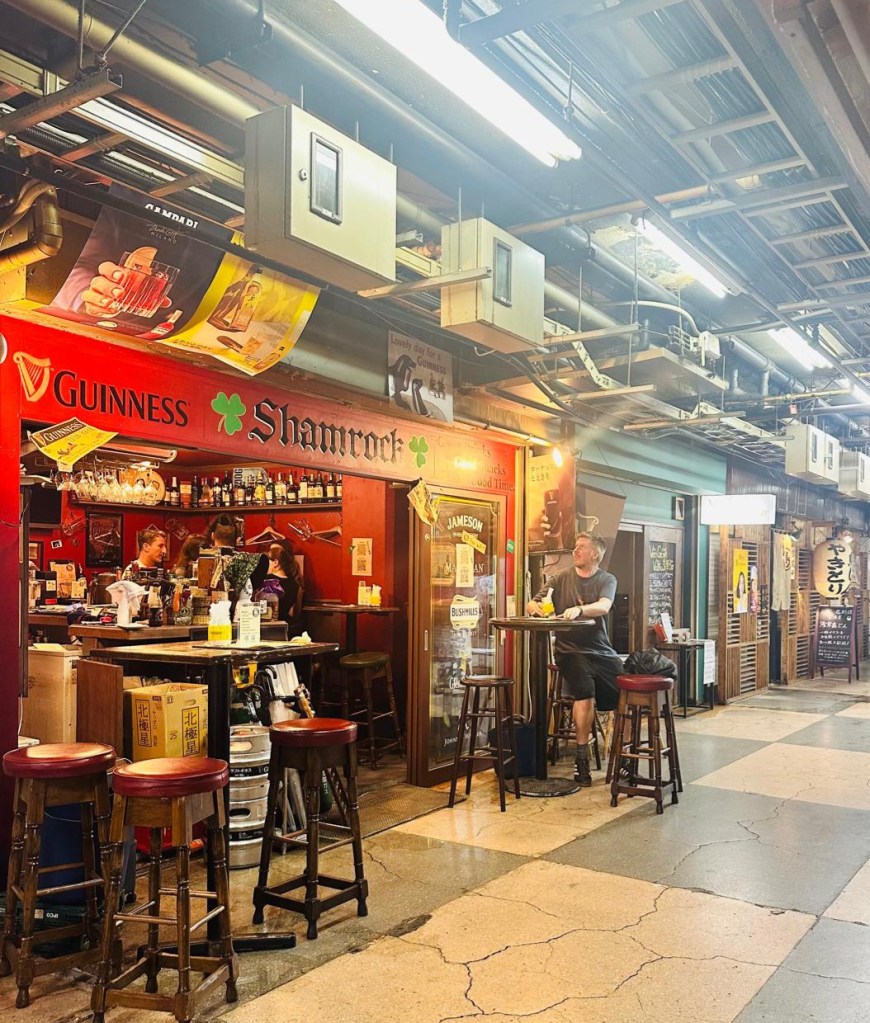
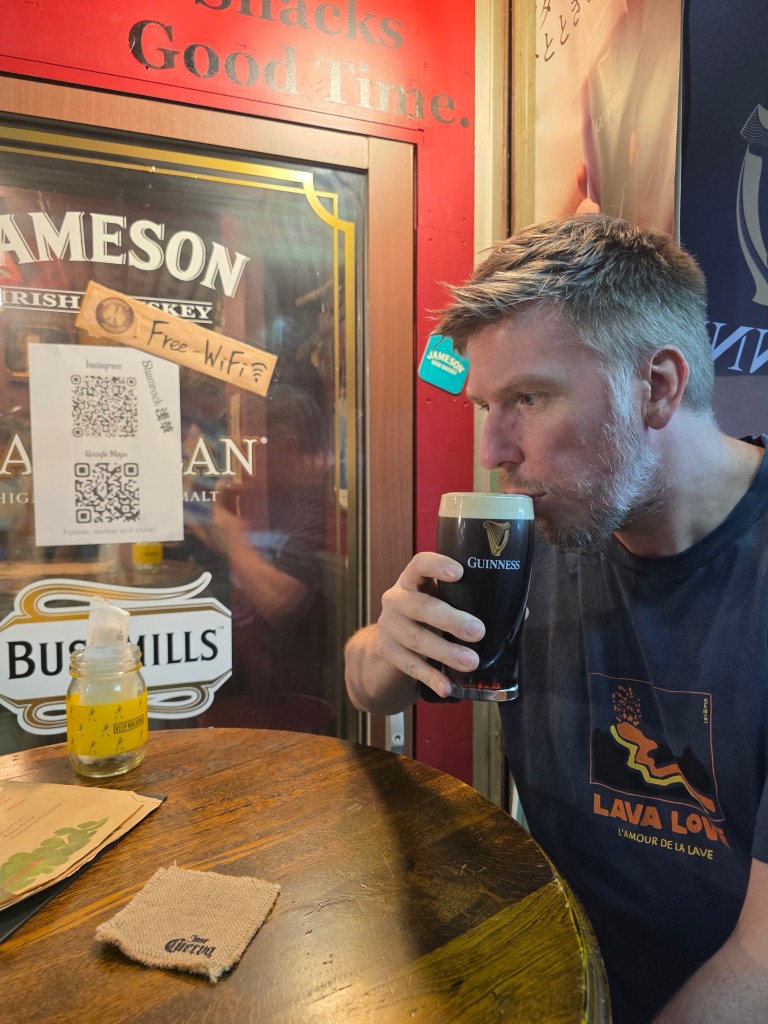
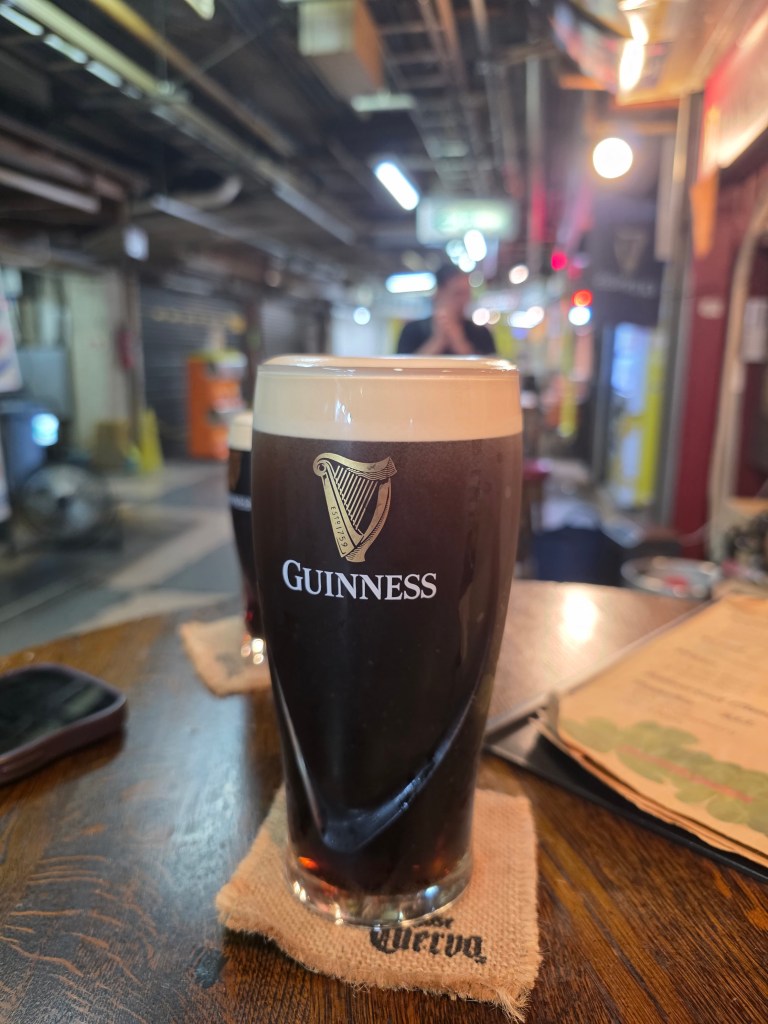
Thus far, courtesy of Google Maps, I’d been doing fairly well negotiating the Tokyo metro, where stations seamlessly blend into shopping centres and all have clean, functioning toilets. In a list of impressive features about Japan, the availability of toilets must figure as the most enviable element. Not gone on the seat warming function though, as it makes it seem another person has only just removed their buttocks and you’re basking in their residual arsewarmth. Oscillate water function is a good bit of crack (sic) though. The Tokyo subway system is a thriving ecosystem of its own, and a wander into some of these catacombs is always a good shout. In the spirit of trusting in what Tokyo has to offer sans google recommendations, next to the crowded Asakusa Shrine we peek into the nearby Asakusa Underground Centre, a warren of izakayas, noodle bars, and those ubiquitous machines with the balls filled with little figurines (gachapon, I believe they call them).
You may know (you may not know) that I spend quite a bit of time researching where to visit to evaluate which pubs might be worth it, but despite being the self-proclaimed leading authority on the world’s Irish Pubs, there’s still plenty that go under the radar. Or street level. And so it was in Asakusa Underground Centre. On a whim, I decided to descend into this inviting wonderland, not looking for anything in particular. As I descended the steps, I spotted a sign that I was not expecting, the familiar toucan, beckoning me 200 metres to sample a pint. And sure enough, lit by the hazy fluorescent lights, surrounded by steam pipes and air con, a throwback to a forgotten Tokyo, was Shamrock, a one-room saloon dedicated to the noble art of Guinness. Truly this is one of the most unique settings for pint-sampling; an underground tunnel shrouded in the perpetual haze of artificial light, the gentle hum of the aircon pipes. Across the way, a salaryman stops to purchase a Pokémon ball from a gachapon. Perhaps it’s for his kids? He proceeds to open it there and then, and on witnessing which creature he got ( couldn’t see which one exactly), he shakes his head in disappointment. First the boss bustin’ his balls and now this! The Shamrock is magical mystery of an Irish Pub, one of the most random and unusual, but with a fine pint and a cool barman who knows his pours. In addition to Guinness, they only sell Asahi, and some sort of spirit with a snake lying in the clouded liquid of the bottom of the bottle. Such are the wonders of Tokyo, where getting lost in subterranean realms can yield rich pickings.
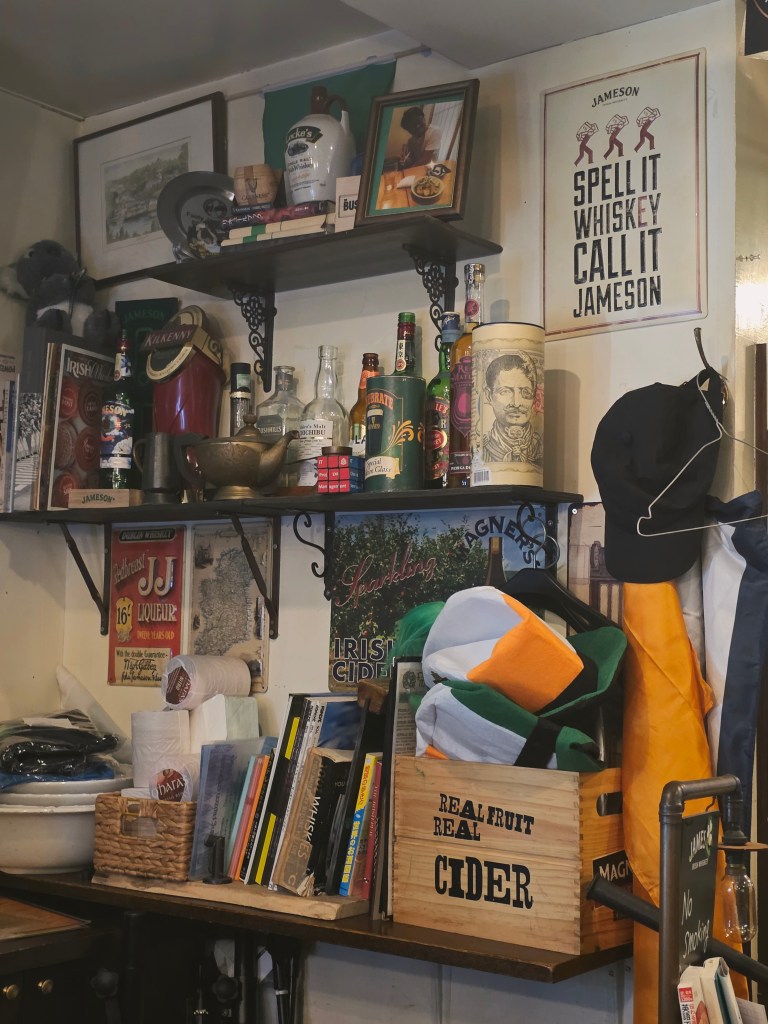
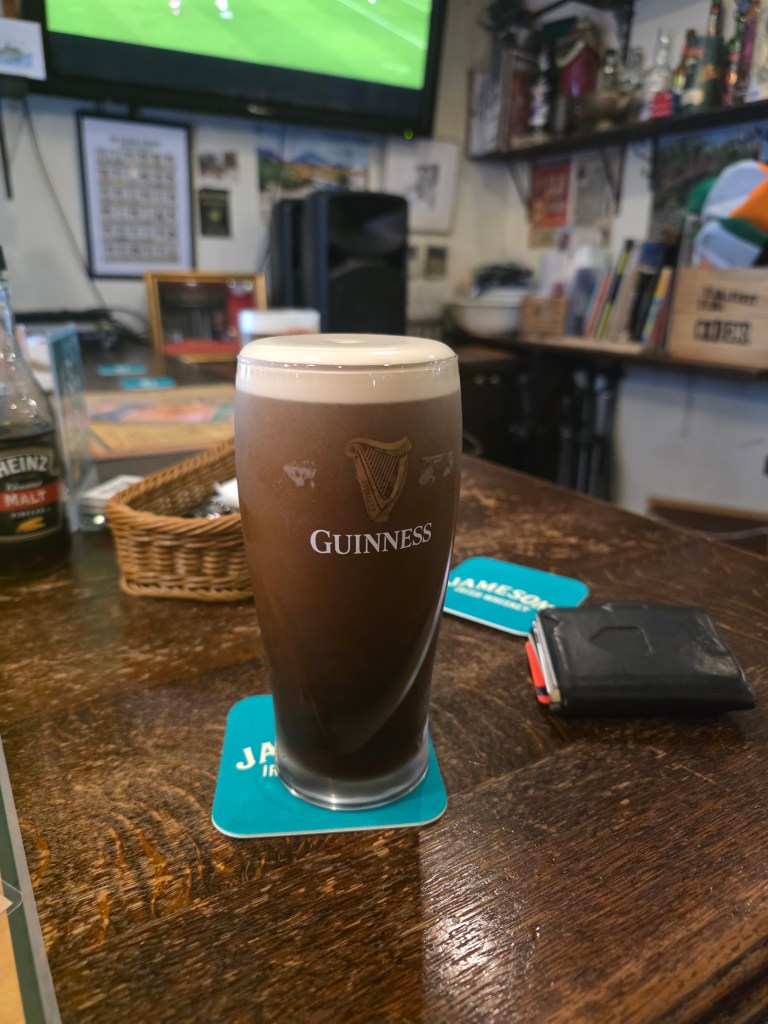
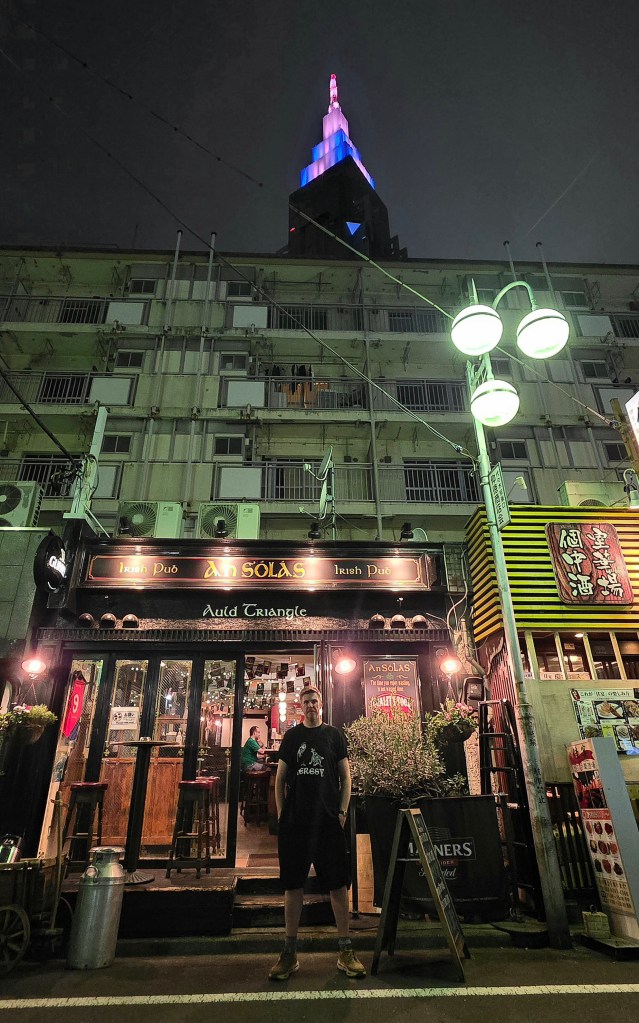
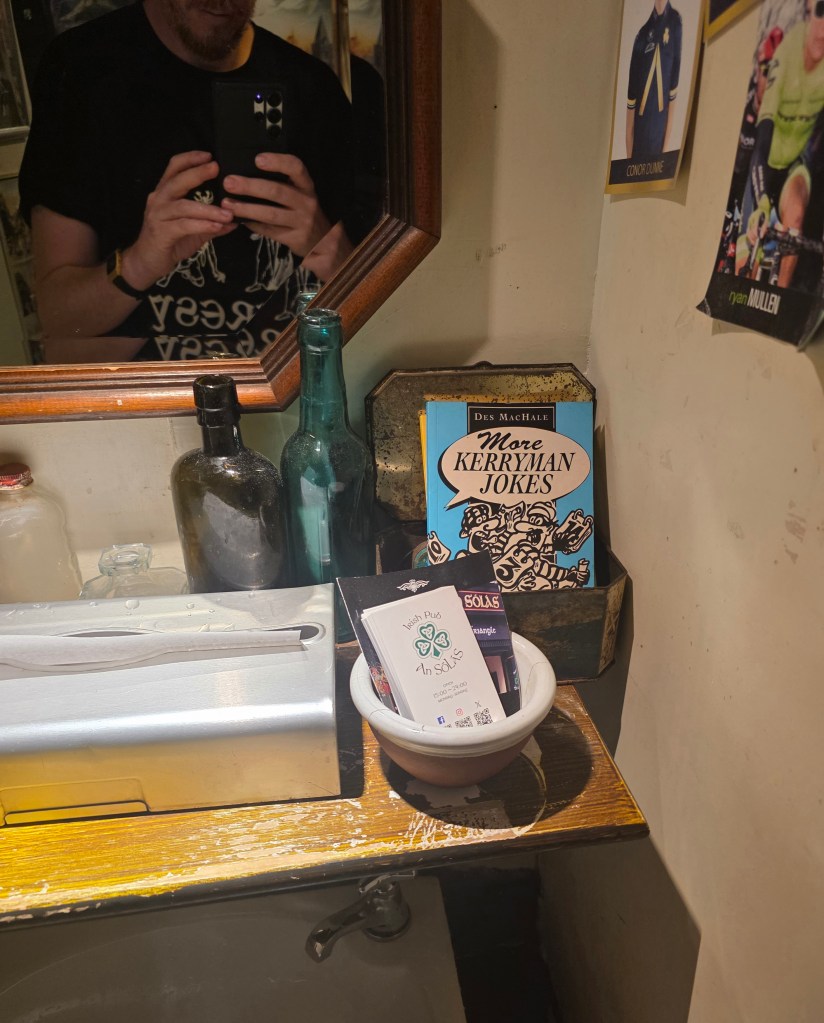
Onto our penultimate night in Tokyo! Shinjuku City by night is a technicolour wonder with plenty to delight the eyes. Over the buildings, a godzilla peers down from the Godzilla hotel. A giant 3-D cat prowls the corner of a Piccadilly circus-esque big screen, endangering pedestrians with its life-like tomfoolery as they navigate a busy street crossing. Nearby lies Kabukicho, the ‘Sleepless city’ and home to Tokyo’s largest ‘Noti’ district, where practitioners of what was traditionally called the ‘water trade’ can be found. Near to this neon metropolis is our final Tokyo Pub, and the most noteworthy — An Solas. An Solas means “The Light” in Irish, and I can confirm, yes, it was indeed a de-light. Many recommended this place as the don of Tokyo’s Irish Pubs, an authentic haven and cultural centre, a fact that becomes apparent about 20 seconds after entering. Firstly, the pub must be one of the hardest settings for an Irish Pub anywhere — down a dimly lit street, a block of flats behind, with the towering retro-futurist Docomo Yoyogi tower looming overhead. Just look at it (see pics) Inside, I do a quick vibe check. A Tipperary jersey hangs by the bar- good start — Tipperary is one of the soundest counties. (All major events in Irish History started in Tipp, and although we are indeed a long way, it’s an auspicious symbol). The pint is great, no qualms there, and the bar is framed by rows of whiskey bottles of all hues, including the wonderfully titled Writer’s Tears. My only critique of the pub is that they are openly displaying hate literature in the men’s bogs, in the shape of a book of Kerrymen Jokes. To think I travelled halfway around the world only to be faced with this. Luckily, we Kerrymen are able to take these jibes with our trademark class, sophistication and all-round magnanimity ( big word for a Kerryman).
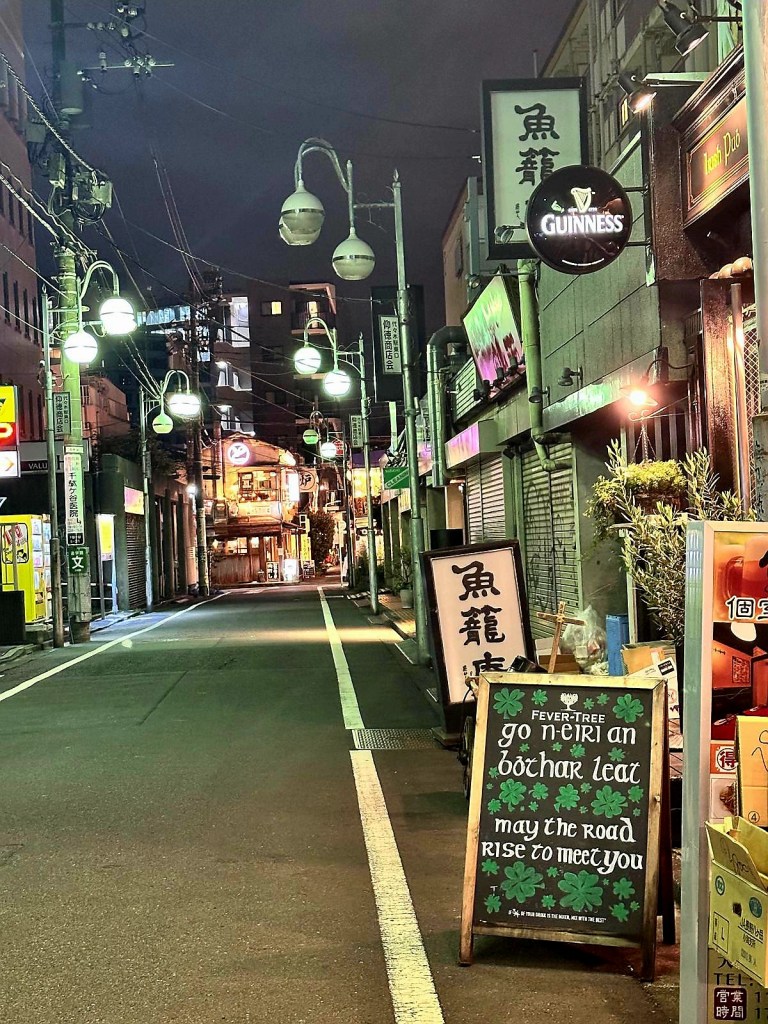
Like all the best Irish pubs, within minutes chat starts with the clientele. A young ex-pat greets us at the bar, proceeding to give us invaluable insider info about how to navigate Tokyo (ignore Golden Gai- try Kichijoji instead). There is an incredibly drunken Welshman who proceeds to shout ‘come on wales’ at a screen showing a football match between Leeds and Fulham. Conversation flows from the loyal clientele at the bar – Kiwis, Irish, Yanks, and the barman joins in, going on the extol the virtues of the pint in Farranfore ( Kerry) airport, a place I know well. The pub is known for having great music sessions, where the musicians are mostly locals who have gotten into trad music in a big way. Western knowledge, Japanese Spirit. An Solas feels like home despite all the neon robots and frilly street maids not but 20 minutes away, and for that I commend it. The Irish name, the GAA jersey, all point to a real life slice of Ireland, and as the pub say themselves, they’re only Irish owned pub in the city. I’m curious however to see if any locally owned boozers can compare? Undoubtedly though, An Solas will figure highly in the Best Irish Pubs in the World for next year’s list, for sure. A shining light in the Irish Pub firmament and we stay till close before racing to get the last train home.
On our final day, after a near meltdown in Tokyo Central Station trying to navigate the multi-levelled busiest station in Japan, I manage to find the Shinkansen port to Osaka and secure a classy ‘Ekiben’- a train themed Bento box you can enjoy on the train. (Some of these boxes are self-heating if you pull a rip-chord, an engineering fact as impressive as these remarkable, long-beaked bullet trains. The second most impressive fact is they go every 12 bloody mins! ). As we blast through the Tokyo suburbs on our way to the Western side of the island of Honshu, thoughts wander to what we may find in Japan’s second city, jocular, octopus loving, Osaka, and if there will be a kind of Cork vs Dublin parallel rivalry between these two opposing cultural centres……….
PART II- OSAK-A CRAIC-A – COMING SOON


2 thoughts on “Publican Enemy in Japan: Part I- Much Edo About Nothing- The Best Irish Pubs Tokyo”