
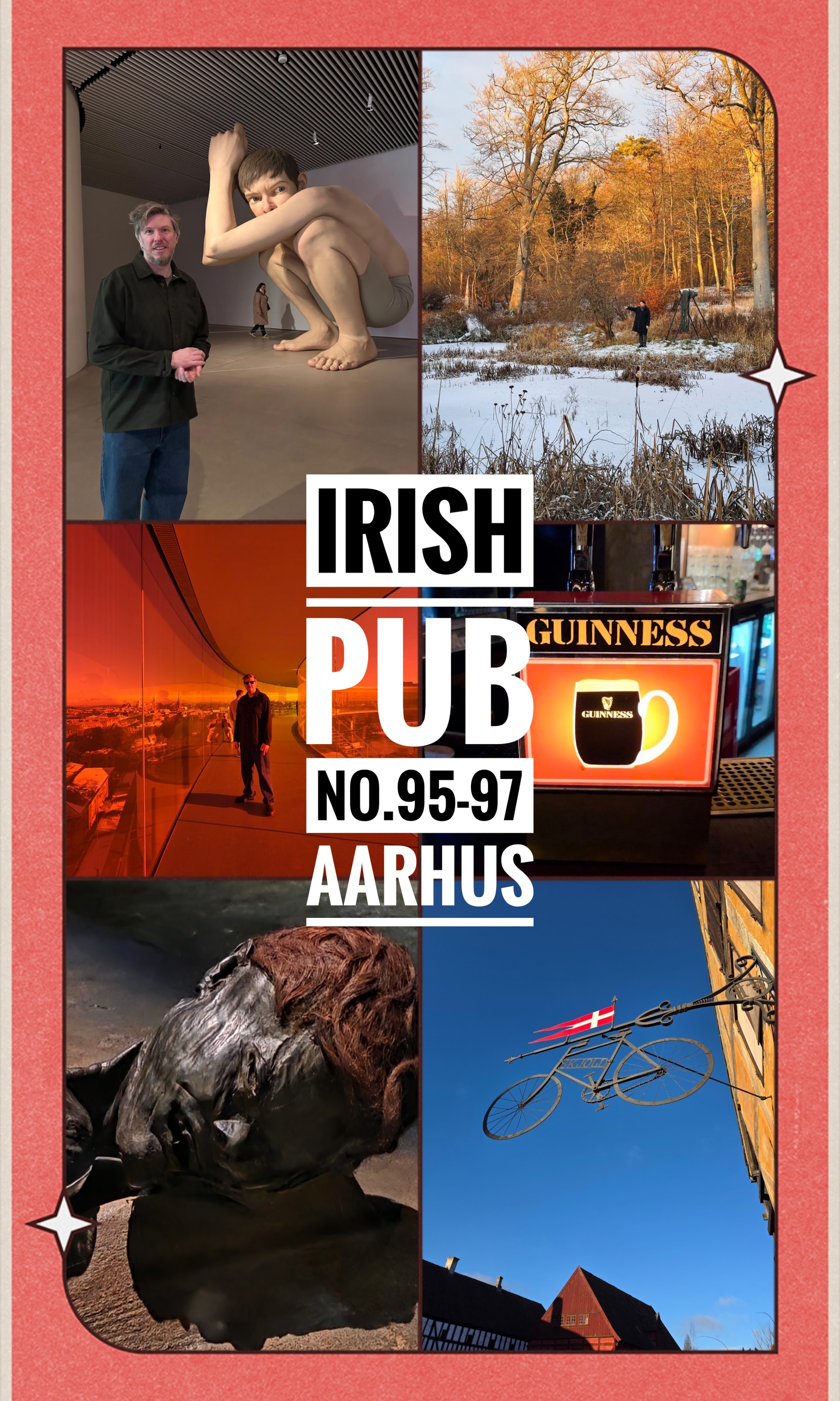
And so, we enter the 9th year of Publican Enemy Irish pub- visiting, and as is tradition, I like to kick things off with a little wintry treat in the shape of a January pub jaunt! Many are bemused by my habit of travelling at the height of winter, but the rationale I assure you is entirely logical. January is, and always has been, that most turgid and grim of months. Nothing happens , apart from recovering from the excesses of the yuletide season, eventually giving way to the aching throb of reality where all you have to talk about is Dry Jan, aka Irish Ramadan. In other words — the perfect time to get away.
But how best to counter January’s comedown reputation as the most depressive of months? What if I told you there was a magical land across the seas where the people are forever happy and know no sorrow? In Celtic Irish myth and lore, this magical land was called Tír na nÓg, where there was no aging and everyone lived happily for all eternity and everyone was sound and in the nip. Surely no such place truly exists???
Well, according to our good friends at the World Happiness Report, there is one such place. If you’ve read the title of this piece, you may have guessed the nation that consistently scores highest in the metrics that measure this kind of thing — freedom, social support, life expectancy and generosity. Yes, it’s the nation formerly known as home of murderous Viking raiders like Sweyn Forkbeard, Gorm the Old, or Harald Bluetooth — Denmark. I always have a level of skepticism about these happiness ranking things , as they neglect such key metrics as Access to a Decent Pint and Proximity to Big Tesco. And yet, what if we could learn the elusive secret of year-round happiness from those who have it in abundance? What the hell is wrong with them that they’re so happy all the time? How can we improve Ireland’s current position of 15th* (*above the UK , in 23rd)? To find out more, I take a trip in the depths of a Scandi winter to see if I can steal their joy. And where better to visit in Denmark than its second city, Aarhus, said to be the happiest city on earth , affectionately nicknamed the City of Smiles. Not to be confused with Bray, Co. Wicklow, the City of Scowls.
Part 1: Ham-net
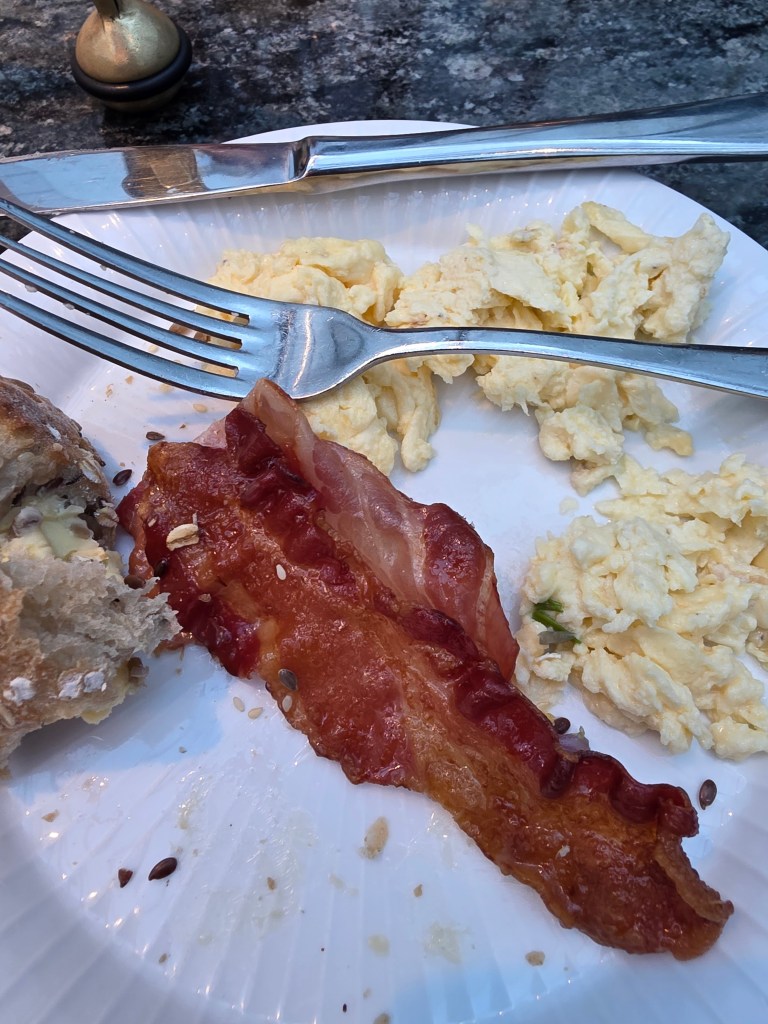
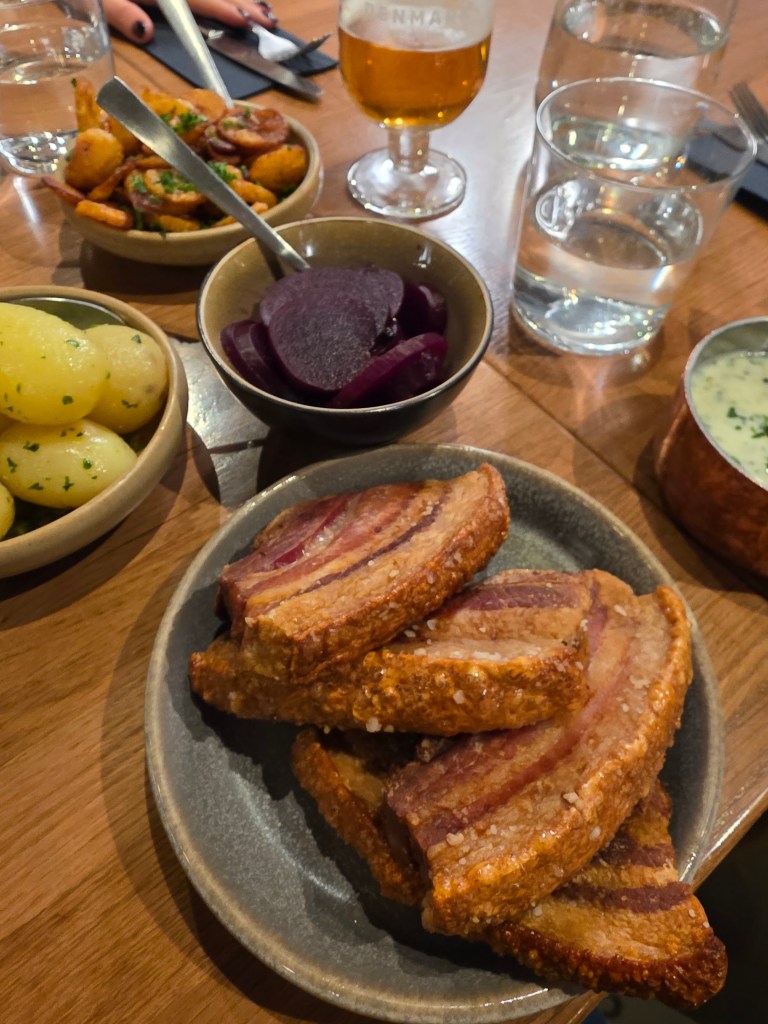
Perhaps by observing the everyday aspects of Danish life and culture, we can find the theories to explain Denmark’s enviable position in the Happiness Hierarchy. Could it be, for instance, their prodigious consumption of bacon is their key to happiness? There are 12 million pigs in Denmark out of a human population of 5.2 million. That’s over two pigs per person. Two pigs and a packet of pork scratchings at least. The golden ratio. Denmark produces and consumes an insane amount of bacon for a country this size. Their national dish is stegt flæsk, just a massive load of fried pork chops served with spuds and parsley sauce. I tried it, and I swear my happiness-ometer rose by 0.85 %.

Another key facet of Danish culinary culture (that understandably sells fewer books in the wellness section )is their love of the humble hotdog. On most street corners you’ll find these pølsevogn, or hotdog huts, which initially might seem at odds with their recent reputation for foraged tree bark and sea herbs, exemplified by the New Nordic Cuisine. Aarhus itself has multiple Michelin-star eateries for a city the size of Cork, yet it’s the less celebrated dishes I’m hunting for — a street sausage washed down with the Danish classic, chocolate milk. My go-to is the Fransk style, a dog’s red-rocket of a dish consisting of a skinny wiener sticking out of a baguette. (See pic). Sublime.
Speaking of Scandi-chic, in my more recent travels, and in my pub visiting in general, I’ve noticed that I no longer care for the minimalist aesthetic of bars, coffee shops and hipster post-industrial zones-turned designated food hubs. Rather than this IKEA minimalism , all graffiti and exposed brick, give me dank, wooden and smoke-filled. And that leads us to some of the more interesting offerings to be found in Aarhus. There are in total four Irish pubs in the city of Aarhus,( the same as the number of Michelin-star eateries), which is a decent return. We have, fittingly, the glamorous Tir na nOg; then a Danish chain pub, The Old Irish Pub, a sports bar called Waxies and, worryingly, one called Flintstone Pub.………….Something may be rotten in the state of Denmark, methinks! Or as they say in Danish: Der er ugler i mosen (literally, ”there are owls in the bog”). Indeed.

Flintstone Pub has been the bedrock of the Aarhus pub scene for years as a type of brun bar, or bodega or værtshus, which all roughly translate as a small pub or dive bar. The Flintstone is a classic of the genre, serving mostly domestic lager, low-lit with a wooden bar, leather seats, but disappointingly no small reptiles performing menial tasks with detached irony. It’s a living! Outside, the pub has beacons for Guinness and Kilkenny, suggesting an Irish connection. But were the Flintstones Irish? The show itself is not known for its fastidious commitment to archaeological accuracy to be fair. Of course, in the early Mesozoic period, the continents were all mushed together, so it’s hard to tell which, if any one, was actually Ireland. Hence, we cannot conclusively state with confidence that the Flintstones were/ weren’t Irish. But if this is an Irish pub, then I’m Barney Rubble.
The first thing you notice on entry to Flintstones Bar is the smoke. Danish law decrees that smoking is illegal in all public spaces, except for some reason in some places where you can. Or so the law seems to the outsider anyway. Digging slightly deeper, it appears that in these smaller pubs, provided they don’t serve food and are smaller than 40 sq m, you can legally puff your brains out. It’s certainly a nostalgic odor as you walk in, letting the years of entrenched stale fag smoke assail you, and for one brief moment you’re transported to 20 years ago when this was the norm. Then you start to think that, yes, maybe smaller pubs should allow smoking, if it pleases the owner and clientele. This wistful amnesty lasts about five minutes, just as the languid stench of stale fags overpowers you, lingering on your clothes and hair, your eyes misty not for a nostalgic past but because of the relentless cigarette smoke. I now know I’m 100% totally behind a smoking ban, which is an interesting way of confirming your stance — just experience a night in a brun bar and you’ll know pretty sharpish where you stand. A bit like when your dad made you smoke the entire box of fags he found in your room to ensure you never smoke fags again. But I suppose the freedom to choose is a valued Danish trait and may partly explain their happiness. Overall, The Flintstone is a classic Danish bodega that just happens to sell Guinness. Yabba Dabba Don’t judge a book by its cover.
To further understand the Danes though, you’ve also got to factor in The Law of Jante. Unrelated to the obscure smoking laws, it is an informal social contract that is sometimes used to explain Danish (and Nordic ) socialist attitudes and their communal egalitarianism and ultimately greater happiness. The ‘law’, more a code of conduct, comes from a famed satirical novel, A Stranger Crosses the Tracks that spells out the essence of the approach to life in a fictional Danish town. The laws, of which there are ten, can be summarised as: you shouldn’t think you are better than us and you’re not to think you’re anything special. We do have a very similar concept in Ireland, which I like to call The Law of Bono, where anyone with American-esque delusions of self worth, importance or general optimism are swiftly denounced as pricks. Or anyone who wears a fancy hat. Slightly more caustic in the Irish context.
Part II: Hygge’s With Attitude
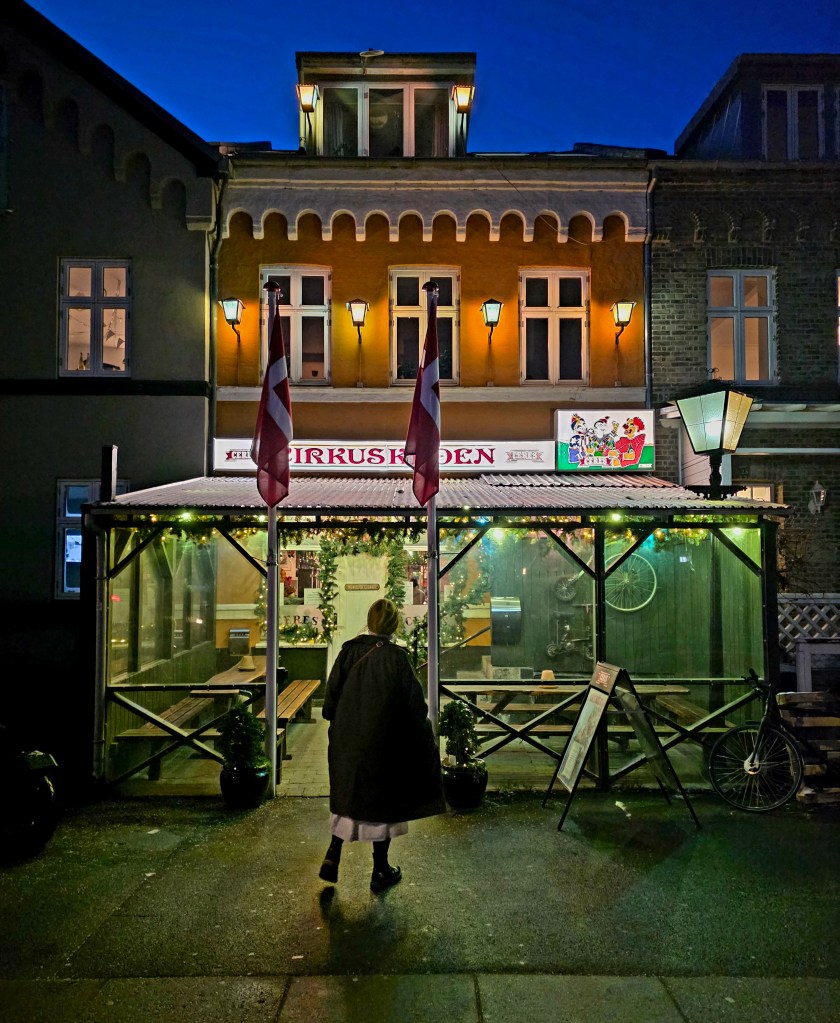
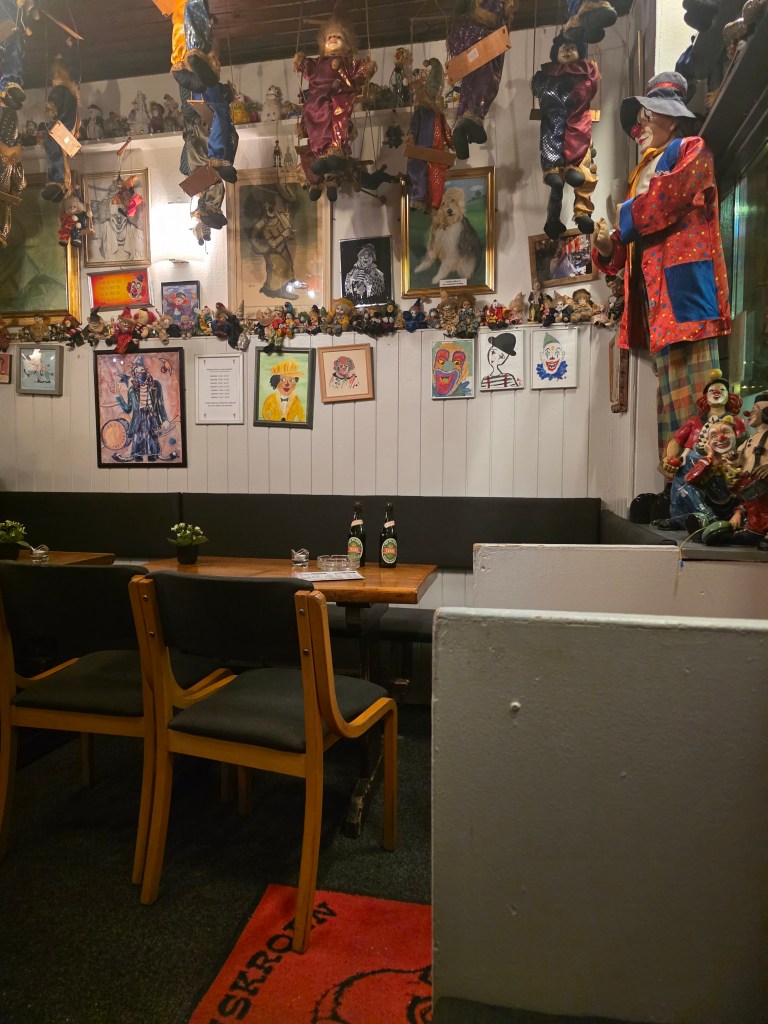
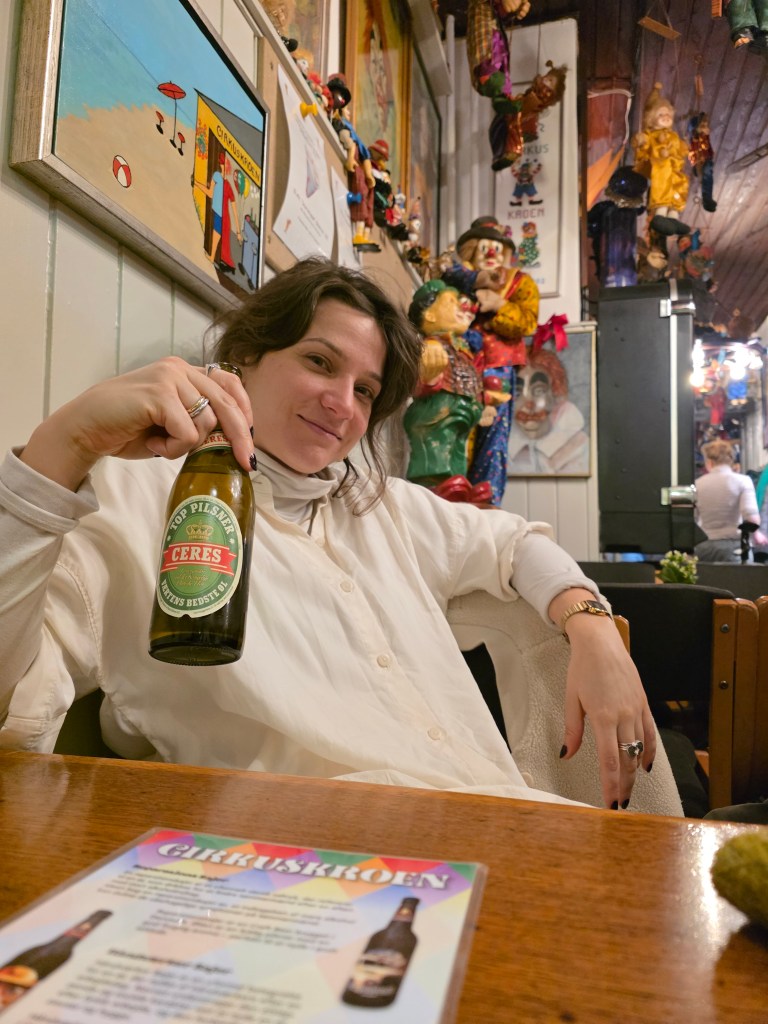
But what is happiness personified? Why yes, you’re right- it’s the noble circus clown of course! Say the words Circus Clown Bar to the average punter and you’ll be met with a surprising and understandable amount of revulsion or sheer terror. A clown bar — that is, a bar full of and decorated entirely with (and by?) clowns — is the diametric opposite of the minimalist Scandi design ethic, in theory. And yet, next it is to the Clown Bar we go. Perhaps this likely spot is a key source of the city’s mirth and joviality. You can just imagine the scene in an Aarhus therapists office:
Man goes to the doctor. Says, “You gotta help me, Doc, I’m depressed.”
Doctor says, “Treatment is simple— well, why don’t you go to the Clown Pub? In Aarhus, the City of Smiles!”
“But Doctor,” says the man, “I am the Clown Pub… owner.”
The Circus Croen Bar, like the Flintstone, is also firmly in the Danish dive-bar fashion. It must be said, the Danes are the rowdiest of the Scandies – not exactly difficult – but they are all drinking away, smoking fags and sinking shots surrounded by hundreds of dangling clowns striking curious poses, a monument to childhood trauma. Apparently the owner sometimes greets guests dressed as a clown. Mercifully, he’s off today (thank f**k). Although it would be funny to go up to him whilst in full garb and say, “Excuse me, I’m looking for the manager.”
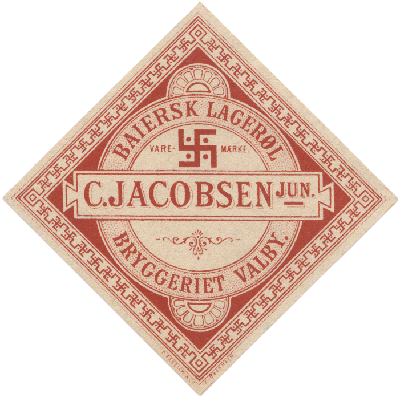
The beer in these parts, I must admit, is quite poor, although luckily their schnapps and grub are on point. There is a local brew, Ceres, which is serviceable, or there’s Tüborg, which I associate with student poverty. There’s also Carlsberg, the most insipid brew known to man. This is, of course, Carlsberg Country — the global Danish pilsner behemoth dominates the nation like Guinness to Ireland. Interestingly, I read founder J.C. Jacobsen got into beer by becoming obsessed with using scientific processes for brewing. If only he had been obsessed with flavour or taste in brewing instead. Carlsberg notably do make “Special Brew”, that Wikipedia describes as “the beer often associated with street alcoholics”. This heady mix was invented in 1950 to commemorate a visit from Winston Churchill. Luckily, by that time they had ditched the swastika logo that used to adorn the bottles.
At this point, it’s time to bring in the Danish concept that is a legal requirement to mention every time you talk about Denmark — Hygge. Hygge was the Collins Dictionary word of the year in 2016, reaching its zenith in the global lifestyle zeitgeist but now presumably overtaken by some other more obscure cultural cliché from Borneo or Nicaragua. I do like when countries have certain idiosyncratic cultural traits though , often summarized in untranslatable phrases. The Danes have their Hygge, we have The Craic, the Swedes lagom, the Germans Gemütlichkeit, the Costa Ricans have pura vida, the Italians dolce vita, the English bantz and the Americans have driving short distances in your car even though you could just as quickly walk. It is interesting to note that the quality of being hyggelig, or cosy, can also refer to having a few cans with the lads and not just snuggling in your jim-jams with a cup of cocoa. So, it is in essence a version of the Craic, just more dimly lit. The Clown Bar has hygge in spades, to be fair. And fittingly, it’s deceptively large on the inside.
Part III :Something Is Awesome in the State of Denmark
Casually, we can dismiss both Waxies Pub and Ye Old Irish Pub as being surplus to requirements. Was it not Hamlet himself who said, “There is nothing either good nor bad, but thinking makes it so”? Well, I think they’re shite, based on my initial observations. So we move on to the largest and most glamorous of the Irish pubs in Aarhus, the one with the most promising name — Tir na Nog. Tir na Nog means the Land of Youth in Irish, a kind of utopia located in the ocean where eternal bliss was guaranteed. Legend has it that Oisín, legendary warrior of the Fianna, travelled to Tir na Nog and became king by running up a hill or something, Kate Bush-style. After about 300 years, he grew bored of this land of plenty, which is fair enough, and he returned home. Alas, due to science, were he to fall off his horse back in our world, he would age instantly and die. Lo and behold, he’s back for five minutes, someone offers him a crisp or something, he falls off his horse and crumbles to dust. Hopefully a similar fate will not befall me when I leave Tir na Nog this evening.
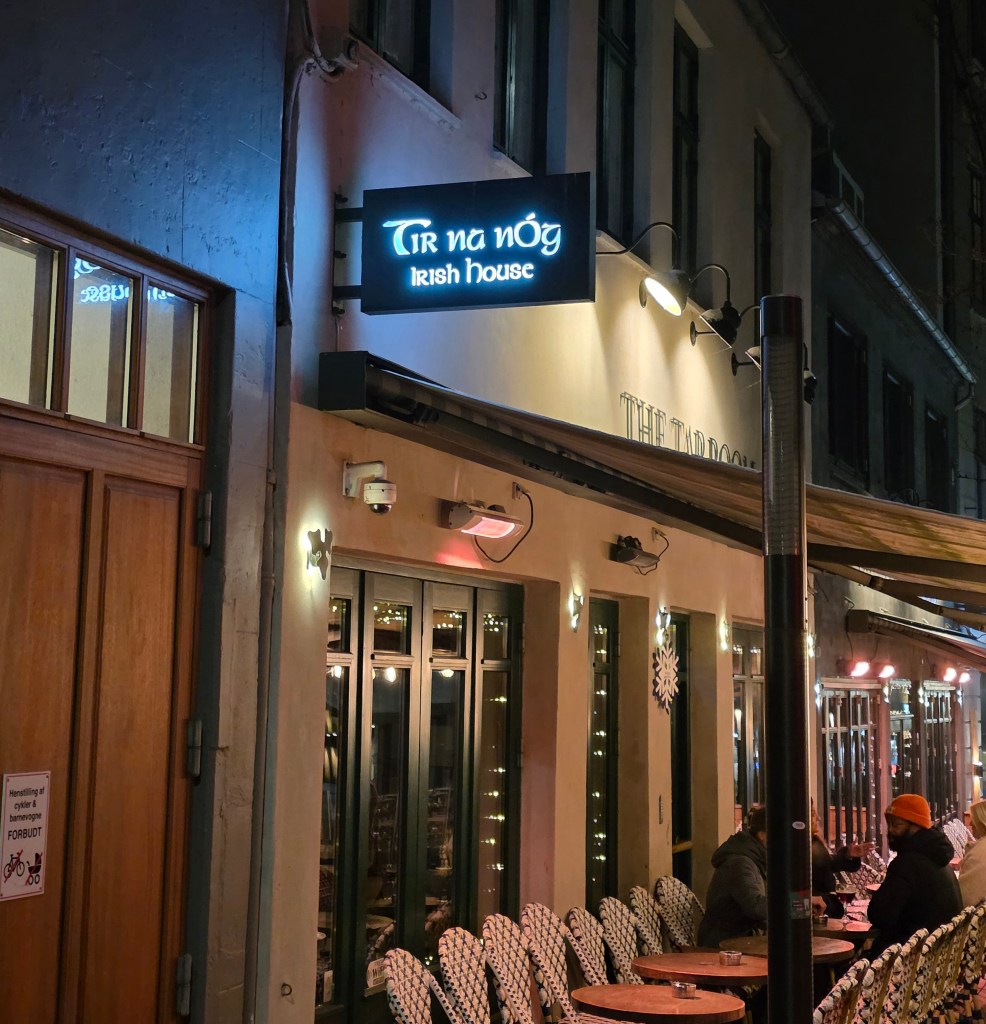

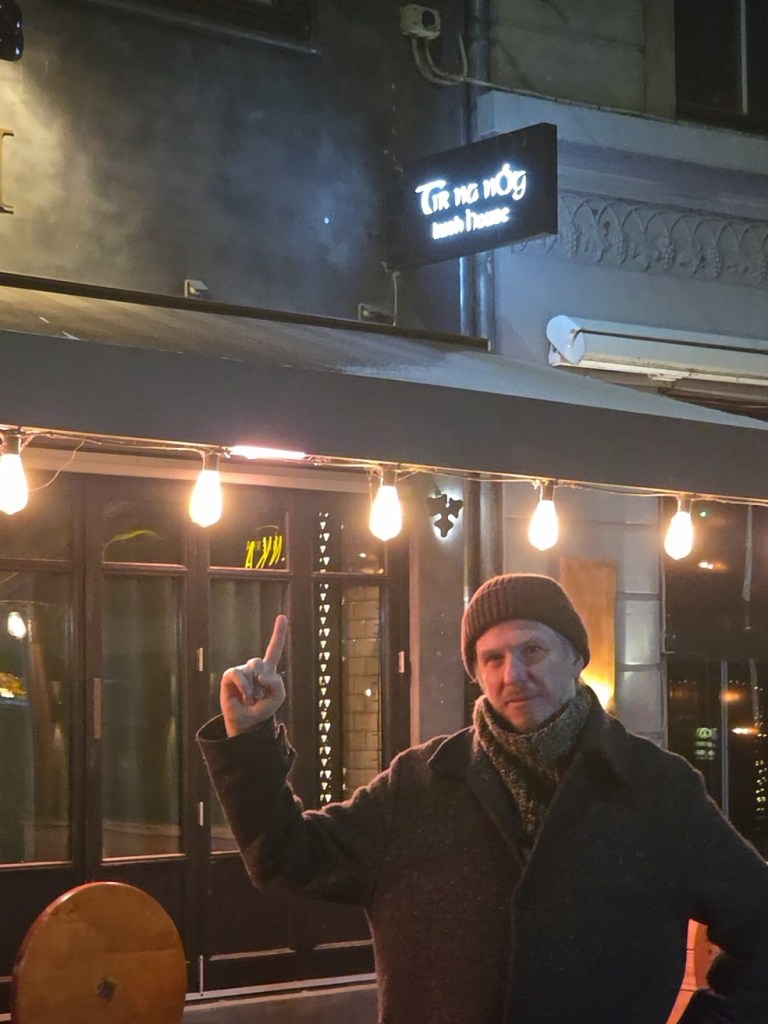
The pub is actually three pubs in one — a cocktail bar, a sports bar and a tap room — but this being the beginning of the year, only one section is open. I try the Guinness, paying in the local krone, which I have no idea the price of; only later do I realise it is about £8.50 a pop. Looking around, the pub is a pleasing mix of Irish style with suitable hygge levels. But even the second city of Jutland, the happiest in the world, is not immune to a vile plague spread from overseas. A screen in the bar proudly pronounces that “Splitting the G Hour takes place on Fridays between 6 & 7, and if you manage to split it, you win a free pint.” The Danes are a proud and classy people, and this tomfoolery will not get them any bonus points on the Happiness Index. It’s also not very law of Jante to performatively drink your pints. After several aquavits, we stumble into the bitter cold , thankfully not falling off any horses nor crumbling into dust, but not far off it the following morn.
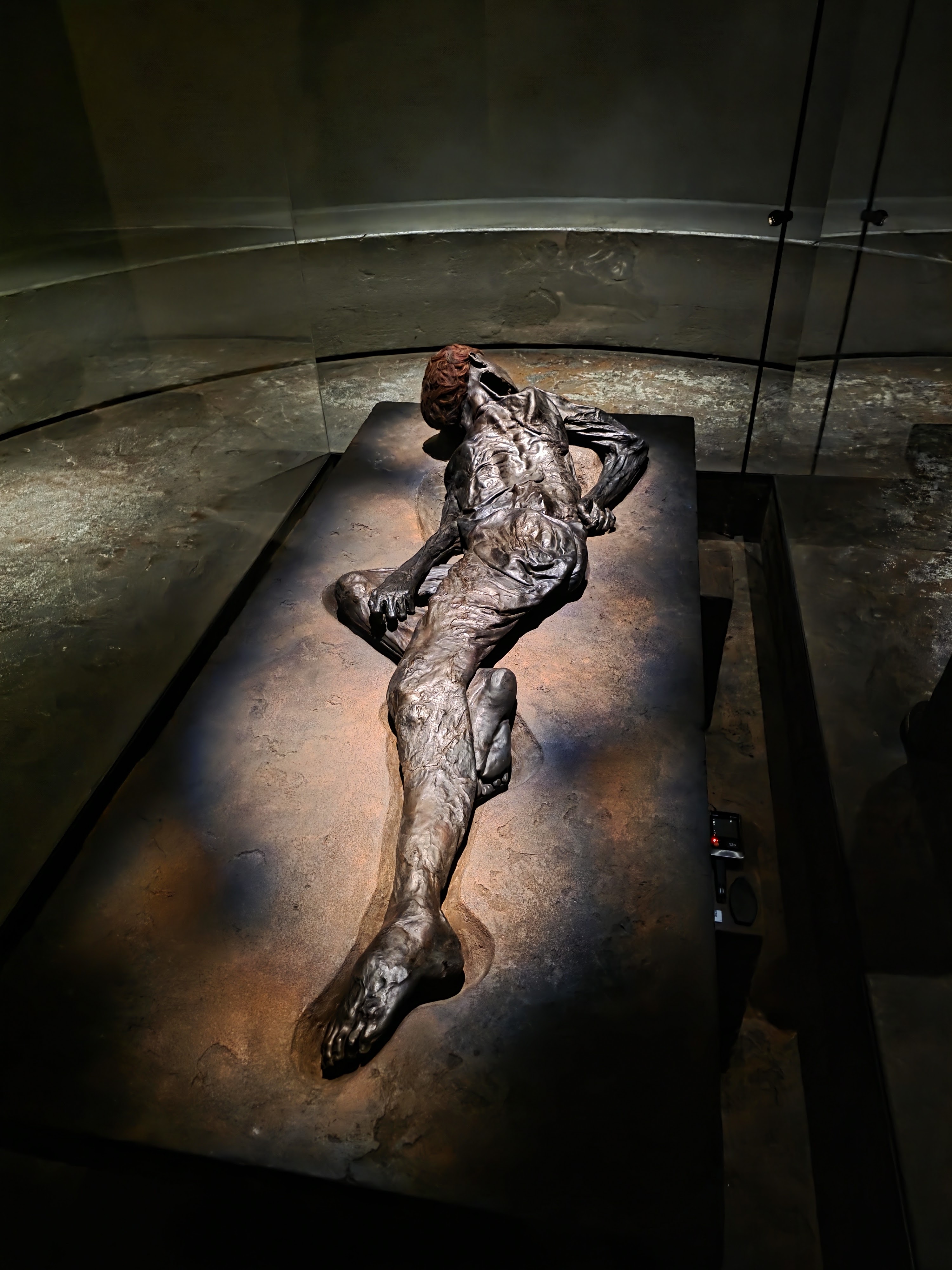
We may not be able to live forever, a lá Oisin of Tir na Nog fame , but in Aarhus you can meet a guy who’s 2000 years old. On my final day, I go south to meet Graubelle man, a Celtic bog body preserved in time. And in a bog. Graubelle man is said to have been a human sacrifice thrown into a marshy …marsh , which would have had some impact the ole’ Happiness Index I reckon. We are not sure as to why he was chosen for this grim fate- perhaps he dishonored the gods by failing to satisfactorily split some sort of primitive ‘G’? We may never know. But we do know what he ate. Researchers carried out detailed analysis on the still preserved contents of his stomach to see what his last meal was. Turns out he had a hot dog in a baguette and a chocolate milk . No, it was actually some sort of grainy mulch.
Out in the mid-winter snow, the roof of the museum holding the Graubelle man cleverly doubles up as a giant toboggan sled rink for the kiddies in their romper suits — a feature designed for pure craic and incorporated into the architectural design of the building. I’m reminded that the Danes also invented LEGO, arguably the finest contribution to human civilization alongside penicillin and the spork. Reflecting on my time here, I think perhaps I have cracked the Danish key to eternal happiness-
Smoke loads of fags, if you want. Eat hot dogs. Drink chocolate milk. Remember to have fun. Don’t split the G.

 KERRYMAN ATTEMPTS TO VISIT EVERY IRISH PUB ON EARTH : Psycho-geography, Anthropology, Pints.