
When I was a lad of about 8 or so, Tuesdays were my least favourite day of the week. For it was on Tuesdays that my mother , in her tireless work for our family, would have to travel far from home for work , entrusting cooking duties to my father, whose culinary crimes (go-to speciality: Sugar Pasta, poached in milk) were many and legend . It was on one such Tuesday that my father introduced my 11 year old brother & I to the anthropological dining experience he himself had created , entitled ‘‘Communal Eating”. Communal Eating was a proto- historic dining role play dreamed up by my father and only to be enacted when my mother was away. It was a fairly straightforward ceremony , consisting of one key central sacred ritual: the Tribal Patriarch ( with the biggest spoon, ) my brother and I gathered around a steaming cooking pot taking turns to scoop out spoonfuls of reheated Bolognese mince my mother had left us. “This”, the Pater Familias would opine sagely ‘‘ is how our forebears would eat, going all the way back to our oldest known ancestors in the East African highlands”, and we stood in a circle and all took turns to dig our spoons into the pot. It would be some 11 years later we came to the cruel realisation Communal Eating was not an attempt to reconcile our modern selves with the tribal nature of our antecendents , but an attempt by my father to avoid having to do any excess washing up. And thus, like all myths, it was essentially an entertaining lie, shrouded in half truth backed up with a quasi-believable back story . Welcome to Episode 53- The Azores : the Blessed Isles?
For what is a myth, if not an entertaining story that we wish to be true? A lad from Donegal once told me that Brazilian footballin’ great Pele was given his sobriquet by an Irish missionary in the Sao Paulo favelas -taken by the youth’s skill with the ball, he christened him ‘Peile’, being the Irish word for football. Absolute bullshit. On another occasion ,I was later told that American Dancehall icon Shaggy’s wife was from Dundalk. Turns out its absolutely true. So what to believe in this era of post-history? And how to differentiate truth from fiction?
All of this leads me to my choice of destination for this episode. This year for my annual voyage abroad , having the inclination to explore new lands , I decided to go the Azorean Archipelago. The past two trips, you may recall , were to Grecian/ Med climes, so I fancied something in contrast to this, and you cannot get more different than the Azores. Located some 2000 odd miles off Continental Europe , these Portuguese islands are known as the Hawaii of Europe ; isolated volcanic mountains peering out the middle of the North Atlantic.
Now, conventional wisdom will tell you that the islands were discovered by Goncalo Cabral, Portuguese seafarer, sometime in the early 15th century. However, what if I were to postulate that ( with a little digging and an opportunity to use my 2.1 Undergraduate degree in History and Archaeology) the islands were actually discovered by a Kerryman hundreds of years previously ? And that the country of Brazil itself was so named after a Mythical Irish wonderland existing somewhere to the West of the Irish Coast ??? Myth, or True fact? Established wisdom or , according to a museum guide I harassed about this in the Azores, and I quote :
”Absolute nonsense”
Let’s look at what we do know. Hailing from the same village as myself in North Kerry , sometime circa 560 AD, there lived a holy man known as Brendan, or Saint Brendan, but he didn’t go round calling himself that. Brendan was to weave himself into the fabric of European history on account of his wonderous travels at sea in the North Atlantic, and notably for his so called discovery of the ISLES OF THE BLESSED : a magical paradise more beautiful, serene and bountiful than any place in Christendom ( except possibly Bray) .


Brendan and his followers, like many Irish monks of the era, were known to have been the first visitors to the Faroe islands ( where they put Brendo on a stamp) and of Iceland , which I discovered on a previous trip . The Vikings recorded that the only inhabitants of Iceland prior to their arrival were “Papar” (coming from ‘Pope’ or ‘Father’ ) , but these Papar don’t preach, they simply lived a life of eremitic devotion to God , living off grid way before doing so became the preserve of mad Libertarian Americans .

We know about Brendan from primary historical sources, notably from his own writings, the Nauigatio sancti Brendani abbatis which holds tales of woe and wonder as he set out into the Atlantic in a style of Irish nautical saga known as an Immram , in search of the wonderful isles of paradise . Knowledge of St Brendan’s Isles were passed on to important cartographers henceforth, and were included on various maps throughout antiquity around the Age of Discovery , situated at various points at sea somewhere in the mid-Atlantic .The Mapamundi of Hereford in 1275 included the Isles of St Brendan , and Magellan is thought to have named ‘SamBoromobon’ bay in Argentina after a crude Spanishisation of St Brendan.
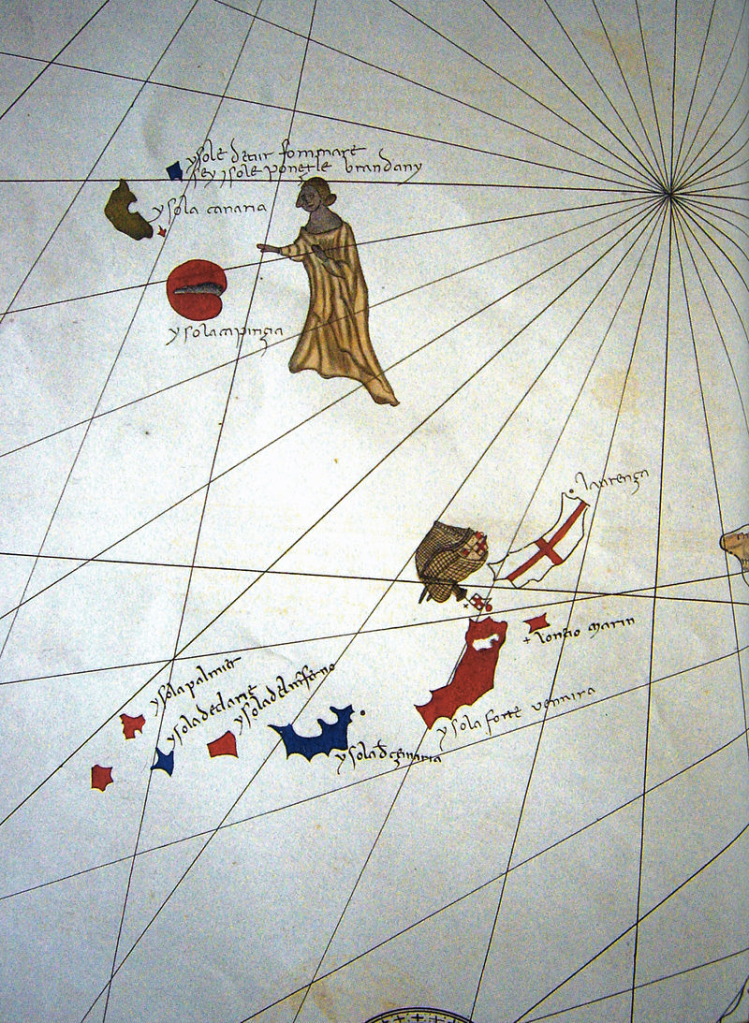
There are no archaeological remains to vouch for the monk’s travails , but remember kids, absence of evidence isn’t evidence of absence! For years , the notion that the Vikings first discovered North America was considered not but the poetic licence of a verbose Icelandic Saga , but the discovery of a Norse settlement in L’Anse au Meadows in 1960’s Canada completely blew up the established pre-held views of a purely Columbian discovery of the Americas. More recently , in 2019, DNA analysis of Azorean mice showed a Scandinavian rather than Portuguese origin ( the mice had set up an egalitarian social democrat society with tiny little mouse -sized self-assembled furniture ). So how possible is all this ? Well , we can see from some museum in Ponta Delgada , capital of the Azores , that they think its pure true ,so we are within the realms of possibility. ( see pic below). So can we , using clues from Brendan’s writings , identifiy anything that might suggest the Azores are the very same lost Isles of the Blessed ? Can I live out my long held Indiana Jones fantasy where we crack a centuries-old mystery?* On the 4 hr flight over , I read the pdf of Brendan’s Navagtio to give me the low down , so let us set sail into a voyage of discovery!! And while we’re here, we can also visit the most isolated Irish pub in the world and see what knowledge I can glean .

Topography , Flora and Fauna:
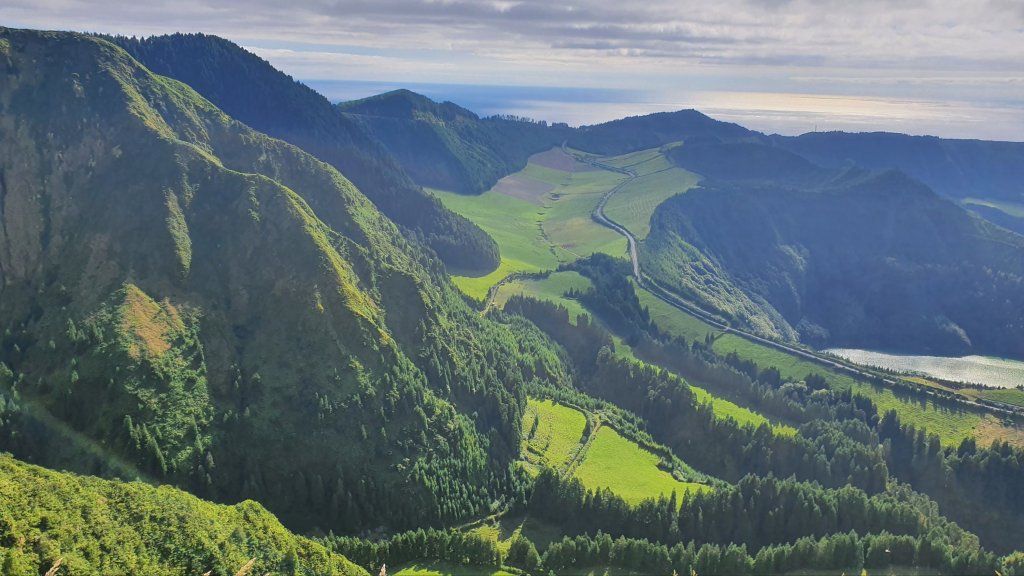
According to the Nauigatio , Brendan tells of sailing for 30 days until spying an island which rises from the sea , shrouded in mists , of rocky coasts with great steaming geysers . The land is green and lush and with bountiful fruits and birds, with foaming seas surrounded by Leviathan monsters. On arrival in Sao Miguel, the largest of the islands , you can tick off many of these particular features looking out the plane window. The Azores aren’t a major package holiday destination , thankfully , so even in the height of Summer , tourist numbers are limited .There are no high rise hotels, no gaudy nightclubs with 1 euro shots, and almost no sandy beaches – these are volcanic mountains that still remain remarkably unblemished .

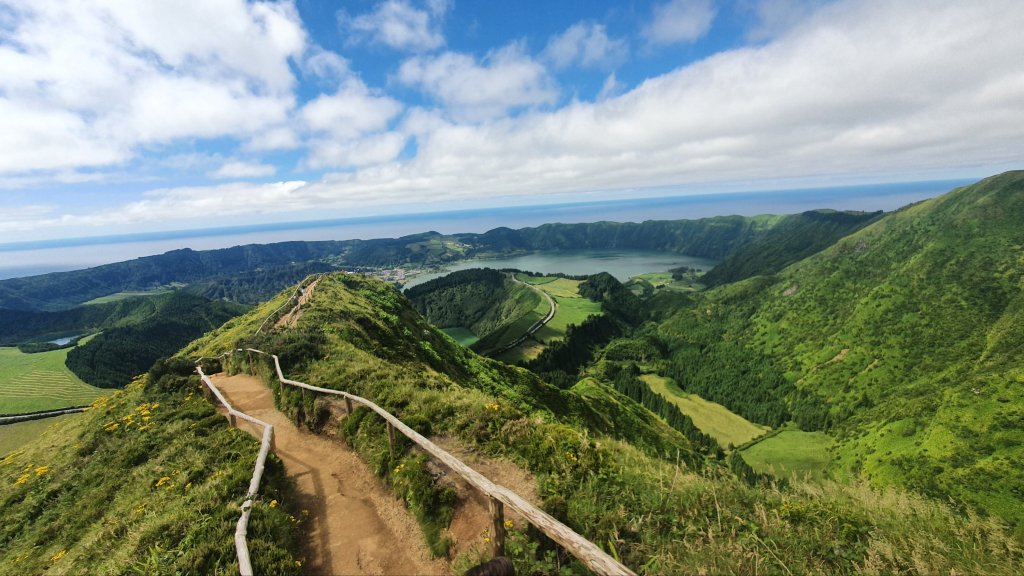
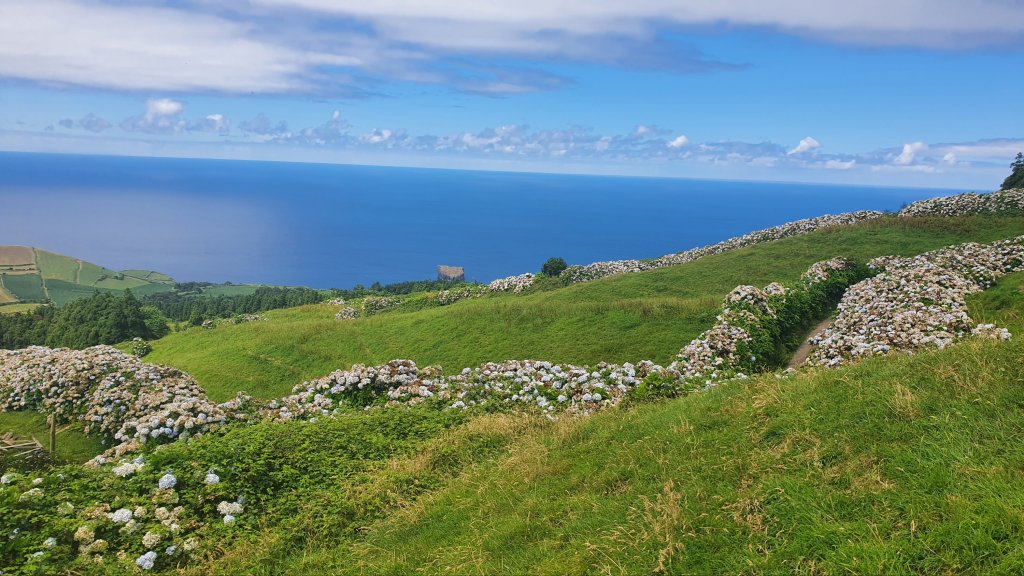
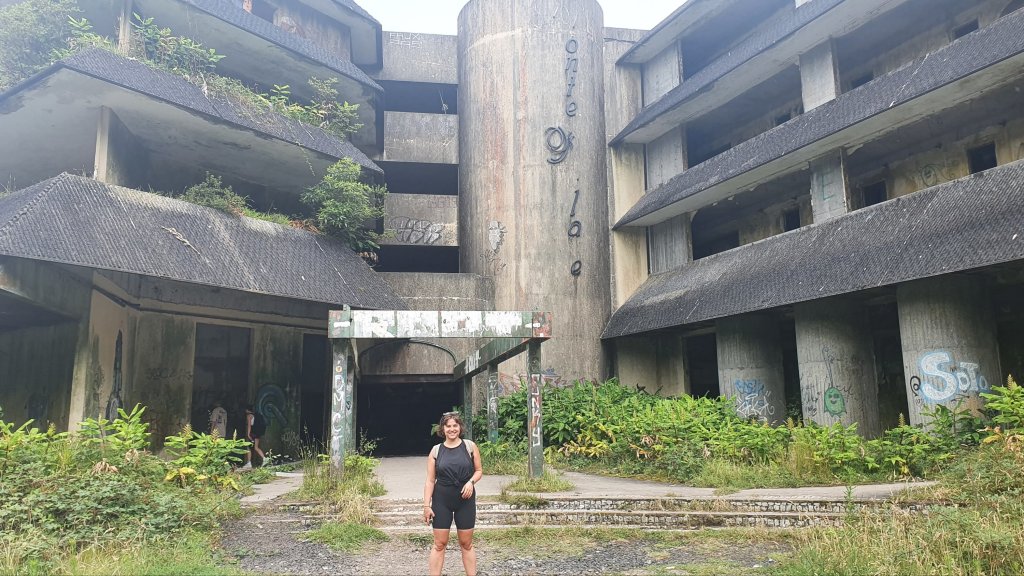
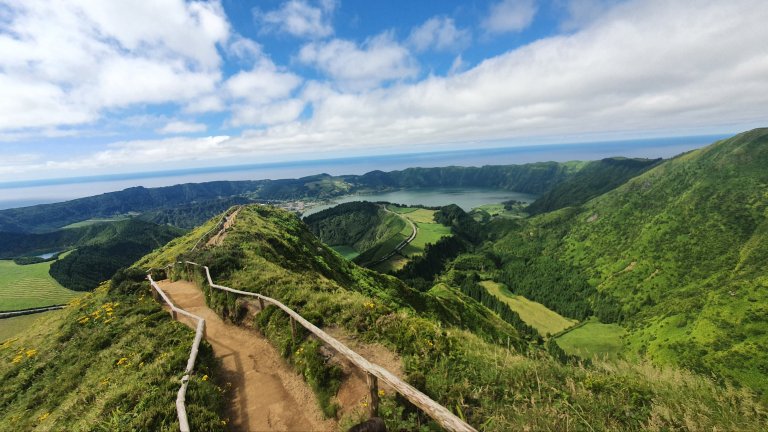
So what are the Azores for ? Well , my god, they are green . It does look like how paradise would appear to an Irish man ; due to its setting, temperatures stay at about 23 degrees all year ; you get sun and a bit of rain almost every day , turning the place into a marvel of nature. The range of greenery is unreal, and while at times resembling Ireland with its stone walls, cattle farms and peaks, there is a tropical feel to the place. Hydrangeas grow wildly on the roadsides , and volcanic craters litter the landscape with their fertile soil a haven for farming and wildlife. One such village , Sete Cidades is noted for its Instagram-breaking viewpoints and is a grand spot for a couple of days hiking. Interestingly, and telling of the Azore’s nascent tourism industry, a majestic hotel , The Monte Palace lies abandoned atop one of the craters , built in 1989 on anticipation of flocks of tourists that would never arrive. If you fancy a bit of URBEX , you can pop around the back and wander around pretending you’re in the Shining to the murmur of dripping roofs and countless drones being operated by idiots making YouTube content.


But what of sea monsters – surely that must be pure bull shite I hear you ask. Well, one of the biggest draws for tourists to the Azores are whale-watching tours , which bring you out to the open sea to see these magnificent beasts spouting foam from their lugholes. They have a no spray no pay policy, so if you don’t see anything , your trip is free. The surrounding seas are a known habitat for a whole range of sea mammals, you don’t need too much patience for these cetaceans , so numerous they are. According to Brendan’s writing , they too came across all range of giant seabeasts, including a memorable anecdote when the monks came upon a totally non-suspicious tree-less island , smooth and slippery to the foot. So naturally they decided to get out and walk all over it and light a fire. Turns out, quelle surprise , it was a frickin whale. This bit I’d say was probably made up to jazz up the tale with a hint o’ drama, so we’ll allow it.

Gastronomy:
Brendan’s description of Paradise makes frequent reference to the bountiful fruits aplenty on the island , and in this case, Sao Miguel delivers . They are big into their pineapple, and if that’s your bag (provided you can get over the alarming Nietzschean fact that while you are eating the pineapple , it eats you too ) , then I recommend the Azorean Pineapple plantation , where after an informative tour on the growing of pineapples , you can get free pineapple liquor shots, pineapple jam, pineapple caipirinhas with a side of pineapple chunks . All served in a pineapple. One of the island’s most famous dishes is perhaps the most exotic example of Azorean-Irish fusion one could imagine- black-pudding with pineapple , the most incongruous combo since pasta and milk, but let me tell you -it is paradise itself. The Azores, like Kerry , are also known for their dairy, (apt for an Exotic Ireland lookalike) ; the verdant , cow filled pastures make for decent cheese , butter and milk which they export back to continental Portugal.


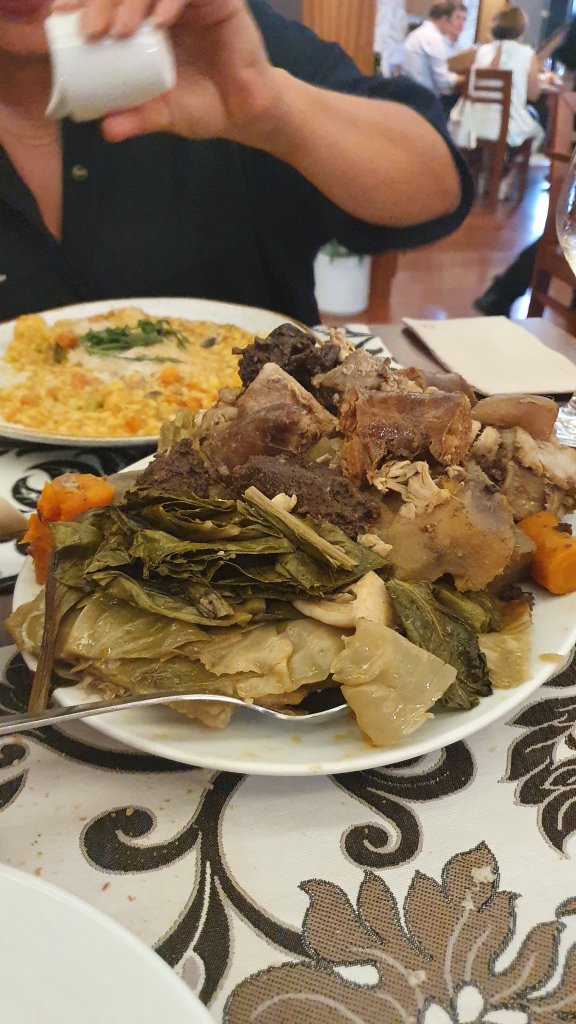
One key description from Brendan’s voyage is a reference to smoke and fumes emanating from the Isles, as if a race of giant smiths roamed the land. Now, could this refer to the town of Furnas , where they have put the geothermal forces to excellent use? Lying in the east of the island , Furnas is a delightful town noted for 2 things – the healing hot springs that turn the water a metallic brown , and the unique national dish, unavailable in any other region on god’s earth , Cozido. Take a stroll around Furnas , and you are assailed by potent waft of sulphur and egg emanating from numerous Fumeroles, tiny geysers where the hot springs reach the surface and pump out steam and gas to the skies . Strangely addictive , like the comforting piquant tang of one of your own farts. The Cozido is a miracle of gaseous gastronomy; a hearty stew that’s no looker , boiled in the bowels of the earth in stony borborygmus hole naturally heated by the earth’s steam and vapour. Tastes better than I have described . Please watch the below video for the entire story of this once in a lifetime Culinary creation! The cozido is popped into the holes each morning and left to stew , giving it this weird, indescribable smoky salty taste that for some reason is incredibly addictive despite looking like a dogs dinner . The meal itself is simple , consisting of a range of Irish childhood ingredients- potatoes, carrots , ham, beef, chicken and bizarrely the best bit – boiled cabbage , that scourge of childhood meals that surely deserves a critical re-evaluation. I have it three nights in a row and each one gets better and better (unlike sugar pasta). And if you aren’t happy with the taste, who are you going to blame ? The earth’s very own geothermal forces?? Hades , god of the underworld ? No one, ’cause its delish. Go to Tony’s for the best one as they serve all the juices on the side in a little teapot.


Nocturnal Pursuits :
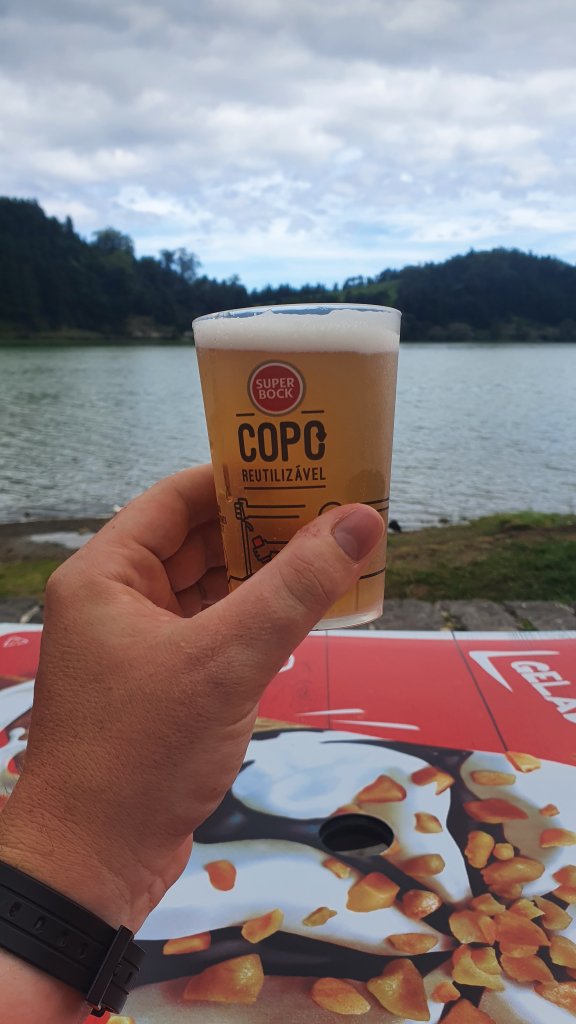
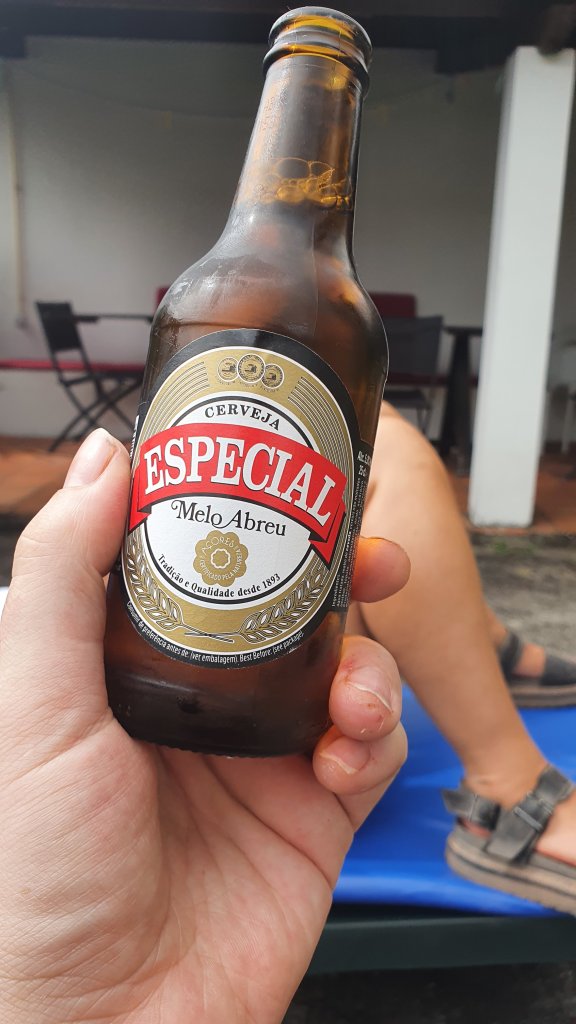
If the Azores is paradise, the local population have certainly looked after it well. The island of Sao Miguel is pristine, neat and incredibly well preserved . The islands , as an outpost from Europe, became home to Flemish and expelled Jewish settlers, and was the main stop over on the way to and from the New World, making it a unique halfway house and a prominent locale in the geopolitics of the time . With the decline of the age of discovery , it was left to it’s own devices and remains still quite on it’s own time- on a couple of occasions we can’t find a restaurant as nothing is open on random days- it’s not a 24/ 7 hedonistic haven of it’s sister isles, the Canaries . In fact, there are almost no nightspots to speak of at all . They drink , for sure- everyone is having a bottle of Super Bock from about 11 in the morning, in these tiny 200ml bottles that evoke fun size mars bars in alcohol form. The local beer is called ‘Especial’ and is nothing especial but that’s fine. There is one spot however in the capital Ponta Delgada that towers over the Azorean Nightlife scene- and that spot is Ned Kelly’s.
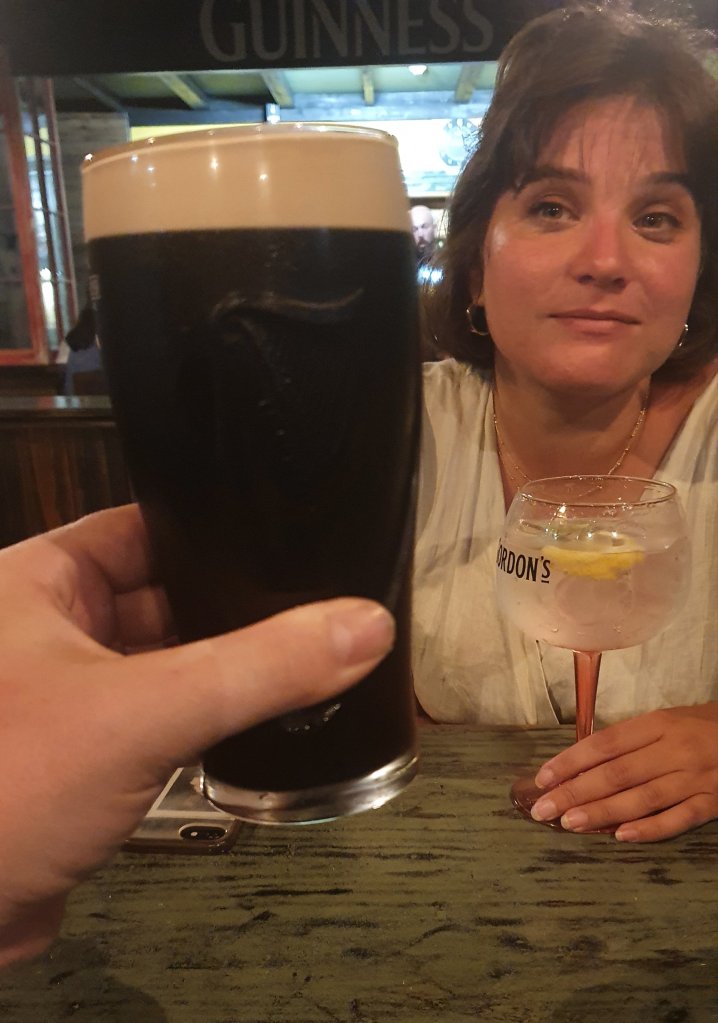
I’ve been travelling for about 6 years now and visited about 50 odd pubs and , let’s be honest here, the overwhelming majority have been either faux Irish-pub by numbers , or more recently , ageing ex-pat sun shields devoid of life. Ned Kelly’s blows these out of the water and reinforces everything that a good Irish Pub abroad should be. Firstly , it clearly says Irish pub and whatnot, but they haven’t spent silly money putting all disgarded milk churns around the place, it’s a nice open space with nods to Ireland but still with a distinctly abroad flava. They have a proper Guinness tap , with proper Guinness glasses ,and in the ultimate seal of approval, they bring the Guinness over to you and ask if you want another one when you’re done. As this is a small town , it is a go-to for a range of people on a night out- tourists, locals, dodgy geezers, college students , which give it a proper atmosphere, as if this is the only place like this in a 1000 mile radius , which it is ! I am not a learned man , but if I were to describe Paradise on the Mid -Atlantic, it would be Ned Kelly’s. Even the mad mural of Cuchulainn at the back can’t take away from what is a fantastic pub , so good that for the first time in Publican Enemy lore, I go back a second night ! That and because there’s no where else.


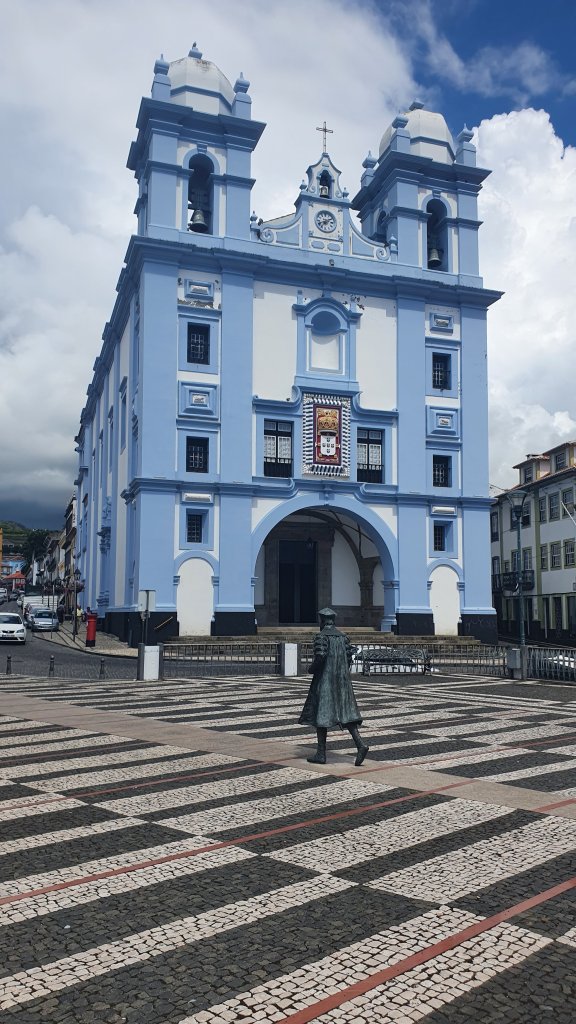
There appears one glaring snag in our Azores/ Isles of the Blessed theory however – Brendan clearly describes the Isle of the Blessed as being circular in shape , and Sao Miguel island is clearly sausage shaped. So could the exact location be our next destination- the nearby rotund isle of Terceira ? Terceira is even smaller again, and holds the historical capital and UNSECO world heritage town of Angra de Heroismo. Overlooking the town is Monte Brazil, a smaller volcano so named after another Irish mythical island ‘Hy Brasil’ .In antiquity , maps also indicated the presence of earlier magical islands in the north Atlantic named after an Irish King called Ui Brasil . It was speculated that this isle gave its name to the modern day nation of Brazil, but alas this is untrue – Brazil is named after the distinctive brazilian wood , logically entitled ‘Brazil Wood‘ . Makes sense. And further woe! There is an Irish pub here in Angra, the snappily titled DACEMAR MARISQUEIRA & IRISH PUB CONCEPT, but the pub appears to be literally but a concept as I can’t seem to find it at all and no one knows of its exisitence, perhaps lost in the mists of time only to appear to the righteous. I leave the Azores, not knowing for certain if these were the Isles of the blessed I have seen but knowing I have glimpsed Irish pub paradise in the unlikeliest of locations with Ned Kelly’s Irish Pub and Grill. Amen , brothers and sisters.



 KERRYMAN ATTEMPTS TO VISIT EVERY IRISH PUB ON EARTH : Psycho-geography, Anthropology, Pints.
Sounds like you had a whale of a time folks…… did you feel sorry for the poor crater c pop
LikeLike